How Value Recognition Strengthens Workplace Culture?
Value recognition goes beyond praise by linking appreciation to company values. It reinforces culture, boosts engagement, and builds alignment. Learn how Empuls helps you recognize what truly matters—how people work, not just what they achieve.

On this page
Recognition isn't hard. A thank-you message, a celebratory email, a digital high-five — most teams do it. The real challenge? Making it matter.
Recognition that sticks isn’t just timely or public. It’s aligned. Aligned with what your organization stands for. Aligned with the values that guide decisions, shape behavior, and define success.
That’s the difference between everyday praise and value recognition — the kind that builds culture, drives connection, and inspires purpose-led performance.
This blog is about moving beyond surface-level appreciation. It’s about how organizations can use value recognition to reinforce what matters most — and turn core values into everyday actions.
What is value recognition?
Value recognition is the practice of appreciating employees not just for what they achieve, but for how they go about it — in line with your company’s core values. It's a way to anchor recognition in something deeper than output. It acknowledges the behaviors, decisions, and intent that reflect what your organization believes in.
For example, when someone collaborates across teams, challenges the status quo to improve a process, or demonstrates empathy in a difficult customer interaction, value recognition highlights that these actions aren’t just effective — they’re culturally important.
Unlike general praise, value recognition:
- Reinforces the values that define your culture
- Creates consistency in what gets recognized and why
- Helps employees internalize what good looks like
- Makes recognition meaningful, not just frequent
It turns every moment of appreciation into a signal. A reminder of what your company stands for and how every person contributes to it.
Why value recognition matters
Company values aren’t meant to sit in handbooks or decorate office walls. They are meant to shape daily decisions, interactions, and behaviors. But for that to happen, values need reinforcement — not once a year during performance reviews, but through consistent, visible recognition.
Here’s why value recognition is critical:
1. It shapes culture through action
When you recognize employees for behaviors that reflect company values, you’re setting a standard. It shows what’s celebrated, what’s rewarded, and what’s expected. Over time, those signals shape the culture more than any policy ever could.
2. It builds emotional connection
People want to be seen not just for what they achieve, but for who they are and what they believe in. Value recognition acknowledges intent and integrity, helping employees feel aligned with the organization’s purpose.
3. It creates alignment and clarity
Values can feel vague unless they are attached to specific actions. Value recognition brings clarity. It translates abstract principles like “customer centricity” or “innovation” into observable behaviors that everyone can model.
4. It enables inclusive recognition
Not every employee works in high-visibility roles. Value recognition ensures that less visible yet equally impactful behaviors—like mentoring, listening, or supporting team morale—also get the spotlight.
5. It fuels long-term performance
Recognition tied to values supports intrinsic motivation. Employees don’t just chase outcomes. They feel proud of how they work, and that pride drives sustained engagement and performance.
How value-based recognition differs from generic recognition
Most companies have some form of employee recognition in place — spot bonuses, birthday wishes, project shoutouts. While these efforts are positive, they often focus on what was achieved rather than how it was achieved.
So what’s the difference?
What makes value recognition more powerful?
- It’s specific. Employees know exactly what behavior made a difference.
- It’s cultural. It reinforces the values your company stands for.
- It’s personal. Employees feel seen not just as workers, but as contributors to something bigger.
- It’s strategic. It creates behavioral patterns that align with business goals.
Recognition without values is appreciation. Recognition with values is alignment. And that alignment is what makes culture stick.
How Empuls enables value recognition at scale
Value recognition becomes powerful when it’s part of your daily rhythm—not just special occasions. Empuls helps organizations turn core values into visible, actionable behaviors through intelligent, integrated, and scalable recognition.
Here’s how Empuls makes value recognition a seamless part of your culture:
Core value badges
Empuls allows you to create or upload custom badges that reflect your unique company values. Employees can attach these badges when appreciating peers, making every recognition moment intentional and aligned with culture.
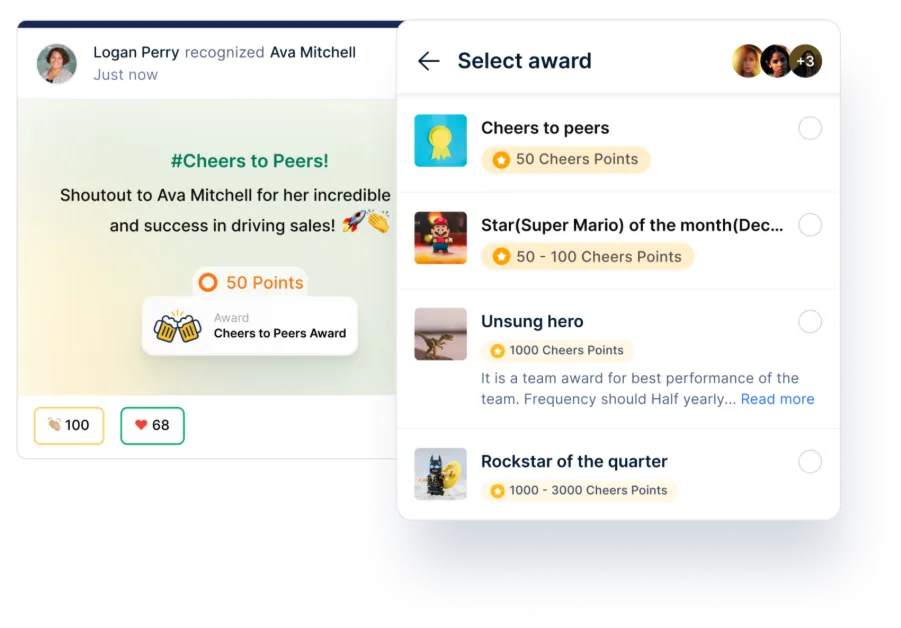
Peer-to-peer recognition
Recognition shouldn’t flow in one direction. With Empuls, every employee has the ability to recognize others for living your values—without needing approval. It empowers everyone to contribute to a culture of appreciation.
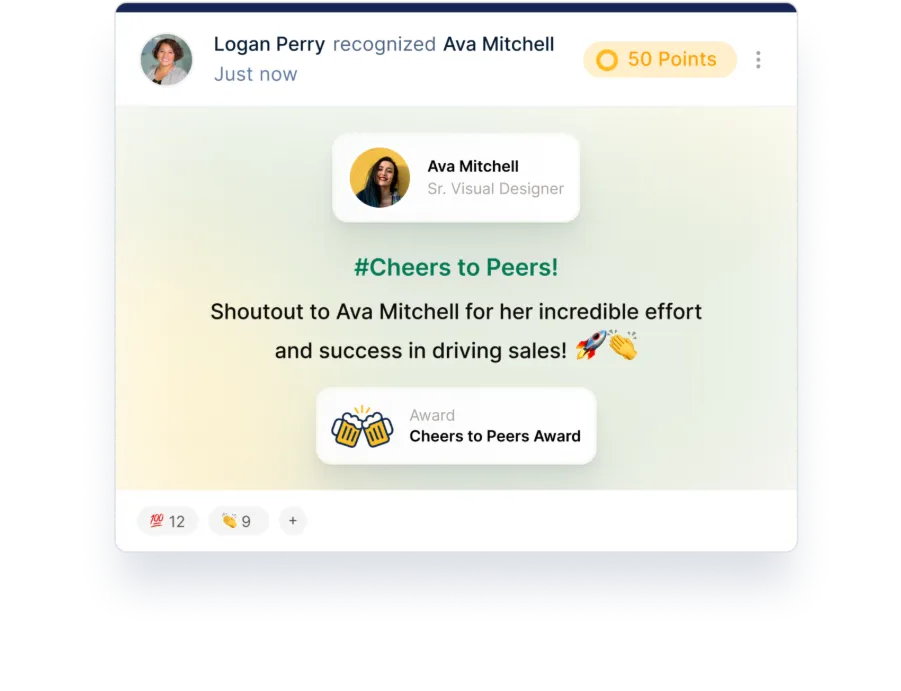
Social feed amplification
Recognitions are shared on a dedicated feed across desktop and mobile, where others can like, comment, or join in. This transparency encourages cultural storytelling and reinforces what good looks like across the company.
Wall of fame
Top recognized employees are featured on Empuls’ digital wall of fame, accessible via interactive mode or displayed in common areas using TV mode. This creates a consistent and visual reinforcement of your values in action.
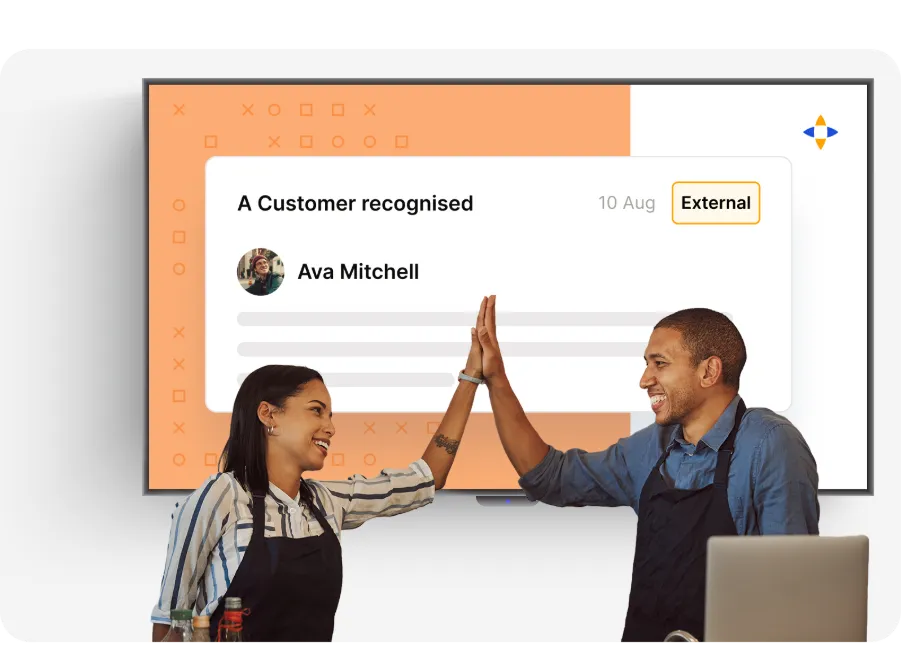
Recognition nudges from AI
The Empuls AI assistant identifies who’s frequently recognized and who might be missed. It nudges managers with smart suggestions to ensure fair, inclusive recognition across teams.
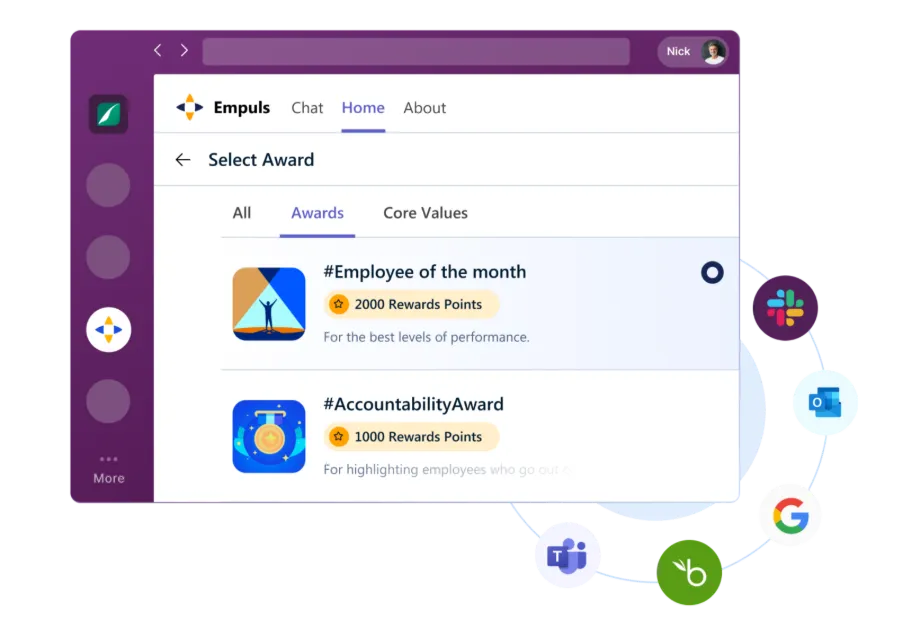
Cross-platform integration
Empuls integrates with tools like MS Teams, slack, Outlook, and major HRMS platforms. Employees can give and view recognitions directly in the flow of work—no context switching needed.
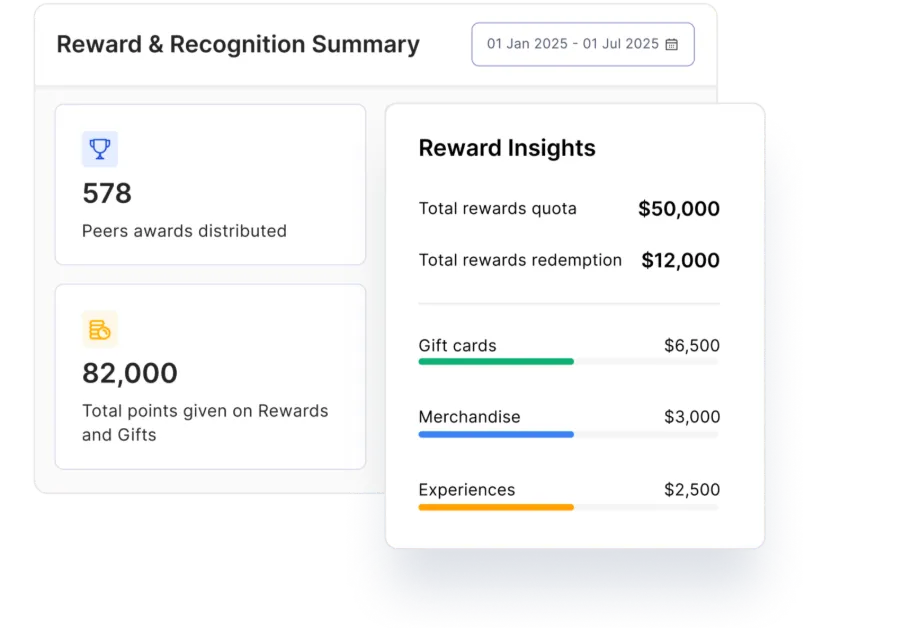
Reports that tie back to culture
Track how often each value is recognized, by whom, and across which teams. These insights help HR and leadership identify trends, gaps, and strengths in how values are adopted across the company.
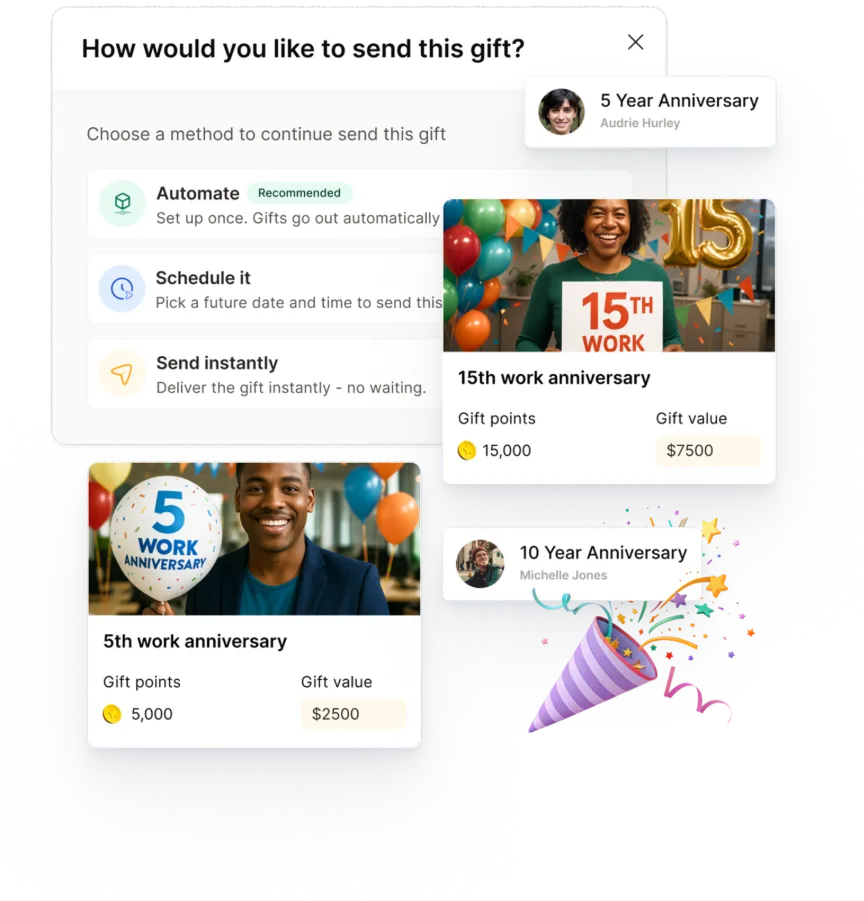
Personalized recognition experiences
Whether it’s a birthday, work anniversary, or spot award, Empuls ensures that value-based recognition is part of every employee journey—from onboarding to exit.
Building a value-first recognition program
To embed value recognition into your culture, you need more than just tools. You need structure, clarity, and commitment. Here’s a step-by-step framework to help you build a recognition program that puts your values front and center.
1. Define values with real-world meaning
Your core values should be clear, actionable, and easy to identify in everyday behavior. Avoid vague or abstract phrases. Instead, give each value context through examples and real-life scenarios.
For example, if "ownership" is a value, define it with behaviors like taking initiative, following through, or raising risks early.
2. Tie recognition to those values
Make it a norm that every recognition includes a reason and a value. Empuls lets you attach value badges to recognitions, turning every message into a moment of alignment.
Instead of “great work,” it becomes: “great work showing initiative — you truly lived our value of ownership this week.”
3. Train your people managers
Managers set the tone. Equip them with examples, templates, and best practices so they know how to spot and recognize value-aligned behavior. Empuls' AI nudges make this easier by highlighting who’s overdue for recognition.
4. Build in automation
Use Empuls to automate key moments—birthdays, anniversaries, performance milestones and attach value-based appreciation as part of the flow. This ensures consistency without increasing manual workload.
5. Integrate recognition in the flow of work
Recognition shouldn’t require a new tab or platform. Empuls integrates with microsoft teams, slack, outlook, and HRMS tools so employees can recognize others where they already work.
6. Monitor, measure, and improve
Track which values are being recognized, how often, and by whom. Use Empuls dashboards to monitor recognition trends, team engagement, and program health. Identify blind spots and take action where needed.
This approach transforms recognition from something occasional into something cultural—embedded in how people think, act, and connect.
Real-world examples of value recognition in action
Value recognition isn’t limited to specific roles or levels. It can show up across departments, teams, and situations — and that’s the beauty of it. When employees start to see their peers being recognized for values, it creates a ripple effect.
Here are a few practical examples across different teams:
Example 1: Customer Support
Core Value: Empathy
Scenario: A support executive stays on a late-night call to help a distressed customer resolve a technical issue.
Recognition Message: "Thanks for staying late and being fully present with the customer. Your empathy and commitment reflect our core value of putting people first."
Recognition Type: Peer-to-peer with a “Customer First” value badge
Outcome: Boosts team morale and reinforces service excellence
Example 2: Product Team
Core Value: Innovation
Scenario: A product manager proposes a small workflow change that significantly improves delivery timelines.
Recognition Message: "Appreciate your creative thinking and experimentation mindset. This is what innovation looks like at work."
Recognition Type: Spot award by manager with value badge
Outcome: Encourages others to speak up with ideas, big or small
Example 3: HR Team
Core Value: Ownership
Scenario: An HR partner independently leads a new onboarding process rollout, without waiting for handholding.
Recognition Message "You owned this project end to end and made it a success. That’s true accountability in action."
Recognition Type: Jury-nominated monthly award
Outcome: Sets a leadership example across functions
Example 4: Finance Department
Core Value: Integrity
Scenario: A team member flags a reporting inconsistency, despite it being missed in audits.
Recognition Message: "Thank you for doing the right thing even when no one’s watching. Your integrity strengthens trust for all of us."
Recognition Type: Manager-to-team recognition with public shoutout
Outcome: Reinforces ethical decision-making
Example 5: Sales Team
Core Value: Collaboration
Scenario: A sales rep helps a colleague close a tough account, even when it doesn’t count toward their quota.
Recognition Message: "Your support helped us win as one team. That’s collaboration beyond targets, and we’re grateful."
Recognition Type: Peer recognition + recognition point award
Outcome: Reinforces team-first behavior and reduces internal competition
Example 6: Engineering Team
Core Value: Excellence
Scenario: An engineer identifies a bug in production before it impacts the customer experience and proactively fixes it overnight.
Recognition Message: "Your proactive approach and dedication to high standards show what excellence looks like in practice."
Recognition Type: Manager spot recognition
Outcome: Sets the tone for quality and ownership in critical moments
Example 7: Marketing Team
Core Value: Curiosity
Scenario: A content writer initiates a cross-functional research project to understand audience pain points better.
Recognition Message: "Your curiosity to go beyond the brief helped us create content that truly connects. Thank you."
Recognition Type: Peer-to-peer kudos with value badge
Outcome: Encourages deeper thinking and original work
Example 8: IT Support
Core Value: Agility
Scenario: An IT team member rolls out an urgent VPN fix during a remote working disruption.
Recognition Message: "Thank you for jumping in and getting everyone back online in record time. Your agility made all the difference."
Recognition Type: Spot award + public post on Empuls feed
Outcome: Highlights the impact of quick action and responsiveness
Example 9: Legal Team
Core Value: Responsibility
Scenario: A legal advisor ensures contract compliance during a fast-moving partnership deal, avoiding future risks.
Recognition Message: "Your attention to detail and responsible oversight protected us from potential roadblocks. We appreciate your diligence."
Recognition Type: Manager recognition with a “Responsibility” badge
Outcome: Reinforces trust in behind-the-scenes teams
Example 10: Learning & Development
Core Value: Growth
Scenario: An L&D specialist creates a new upskilling path for deskless employees, increasing training completion rates.
Recognition Message: "Thank you for designing programs that enable every employee to grow, no matter where they work."
Recognition Type: Jury-based quarterly award
Outcome: Encourages inclusive learning initiatives
Example 11: Operations
Core Value: Simplicity
Scenario: An operations associate automates a complex inventory process that saves the team hours each week.
Recognition Message: "You’ve simplified something that was a known pain point — a true reflection of our value of simplicity."
Recognition Type: Recognition + reward points
Outcome: Drives process innovation and operational efficiency
Example 12: Procurement
Core Value: Transparency
Scenario: A procurement officer shares vendor negotiation details and documents every decision for internal auditing.
Recognition Message: "Appreciate the clear documentation and transparent communication — it’s a practice we all benefit from."
Recognition Type: Public feed post with value tag
Outcome: Promotes ethical practices and cross-team collaboration
Example 13: Facilities/Admin
Core Value: Service
Scenario: A facilities manager ensures a seamless hybrid workspace setup during a company-wide office redesign.
Recognition Message: "You went above and beyond to make everyone comfortable and productive. Your service mindset stands out."
Recognition Type: Service anniversary + milestone award
Outcome: Shows that recognition is not role-specific
Example 14: Business Development
Core Value: Courage
Scenario: A BD executive presents a bold new market entry strategy that challenges current thinking.
Recognition Message: "Your courage to push boundaries is what drives our evolution. Thank you for bringing bold ideas to the table."
Recognition Type: Manager + leadership recognition
Outcome: Encourages calculated risk-taking and thought leadership
Example 15: Customer Success
Core Value: Commitment
Scenario: A CSM checks in with a disengaged client and revives the relationship through consistent support.
Recognition Message: "Your commitment to turning the client experience around was inspiring. You truly lived our value of staying with it."
Recognition Type: Peer award with badge + leaderboard shoutout
Outcome: Reinforces long-term thinking and relationship building
These examples show how value recognition doesn’t need to wait for a big event or title. When embedded into day-to-day work, it amplifies the right behaviors and strengthens the fabric of your culture.
The long-term impact of value recognition on culture and business
Recognition may feel like a soft skill, but its impact is anything but soft. When tied to values, it becomes a lever for culture, connection, and performance — with long-term effects that ripple across every part of the organization.
Here’s what value recognition drives over time:
1. Stronger cultural alignment
Employees don’t just memorize values—they live them. Value recognition builds a culture where actions match intentions, and where what gets rewarded reflects what the organization truly stands for.
2. Greater employee belonging
When people are recognized for behaviors that reflect who they are, not just what they do, they feel seen. This creates a sense of psychological safety and inclusion, especially across hybrid and distributed teams.
3. Improved retention
Employees who feel valued stay longer. In fact, companies using Empuls reported a 90 percent increase in employees feeling valued, and 87 percent drop in attrition risk. Value-based recognition fosters loyalty without relying on compensation alone.
4. Higher engagement and productivity
Recognition tied to purpose boosts intrinsic motivation. Employees become more engaged in their work, and engagement leads to higher output, better collaboration, and stronger results. Empuls users reported 1.5x growth in company revenue when value recognition was consistently practiced.
5. Better leadership visibility
With Empuls dashboards and AI insights, leaders can track which teams are embracing values and where gaps exist. This turns recognition into a source of people intelligence, not just praise.
6. A more connected workforce
Recognition cuts across roles, regions, and hierarchies. Whether someone is in sales or support, at HQ or remote, they can contribute to and benefit from a shared culture. With empuls, 62 percent of employees reported feeling more connected and informed.
Value recognition isn’t a campaign. It’s a culture system. It takes what you believe in as an organization and brings it to life — one meaningful moment at a time.
Final thoughts — make your values visible, daily
Core values only matter when they’re lived. And they’re only lived when they’re recognized.
Value recognition turns company culture from something abstract into something actionable. It connects people to purpose, builds stronger teams, and aligns daily behavior with what the organization truly stands for.
With Empuls, you don’t just appreciate effort — you amplify the values that define your workplace.
From AI-powered nudges and value badges to real-time dashboards and global recognition feeds, Empuls helps you create a culture where recognition is strategic, inclusive, and tied to what matters most.
Because when people are valued for how they work — not just what they deliver — they bring their best, every day.
Ready to put values at the heart of recognition?
Empuls makes it easy to recognize, reinforce, and scale your values across teams, departments, and geographies.
👉 Book a personalized demo and see how Empuls can help you build a value-led culture — one recognition at a time.