On this page
Upward feedback is the process where employees share observations, suggestions, and praise with their managers—focused on leadership style, communication, decision-making, and team support. It enables open dialogue, builds trust, and strengthens the relationship between leaders and their teams.
When done well, upward feedback helps managers become more self-aware, fosters a culture of continuous improvement, and empowers employees to contribute beyond their day-to-day roles. It's not just feedback—it's a leadership development tool.
In this blog, we’ll explore:
- Upward feedback meaning and how it works
- Why upward feedback is important for managers and teams
- How to give upward feedback that’s clear, respectful, and impactful
- A variety of upward feedback examples, including positive and constructive ones
- Ready-to-use upward feedback samples and templates
Let’s dive into what makes upward feedback effective—and how you can use it to drive better leadership and team success.
What is upward feedback?
Upward feedback is a form of communication where employees provide feedback to their managers. It focuses on areas such as leadership effectiveness, clarity of communication, support for team goals, and overall management style.
This feedback can highlight what a manager is doing well—such as empowering the team or providing timely support—as well as areas where improvement is needed, like micromanagement, unclear expectations, or lack of recognition.
Unlike traditional performance reviews where feedback flows top-down, upward feedback encourages a two-way conversation. It shifts the mindset from authority to accountability, making feedback a shared responsibility across all levels of an organization.
Upward feedback meaning in simple terms:
It’s honest input, shared with the intent to help a manager grow and lead more effectively—based on real experiences from the team.
Why it’s valuable:
- Promotes continuous leadership development
- Strengthens manager-employee relationships
- Improves team dynamics and communication
- Creates a culture of openness and trust
Whether delivered in a one-on-one meeting, through a survey, or as part of a review cycle, upward feedback gives employees a voice—and gives managers the insights they need to lead with impact.
Why is upward feedback important?
Upward feedback plays a crucial role in creating a workplace culture where communication is open, growth is encouraged, and leadership is accountable. It ensures that managers are not just guiding teams—they’re also learning from them.
Here’s why upward feedback matters for individuals, teams, and organizations:
1. Builds better leaders
Managers often rely on perception or limited input to evaluate their leadership style. Upward feedback provides direct insights from the people they lead, helping them understand how their actions affect others and where they can improve.
2. Encourages a culture of openness
When employees feel safe to share feedback with their leaders, it creates an environment of transparency and psychological safety. Teams become more collaborative, trust levels rise, and problems are addressed faster.
3. Improves manager-employee relationships
Regular upward feedback opens the door to deeper, more meaningful conversations. It shows that employees are invested in mutual success—and that managers are willing to listen, reflect, and evolve.
4. Drives performance and engagement
Managers who act on upward feedback create more engaged teams. Employees feel valued and heard, which directly impacts motivation, productivity, and retention.
5. Supports organizational growth
Organizations that embrace upward feedback create adaptive leadership, better decision-making, and stronger alignment between teams and company goals.
In short, upward feedback empowers employees and helps managers lead with clarity, empathy, and accountability—turning feedback into a powerful force for growth.
How to give upward feedback
Giving feedback to your manager might feel challenging—but when done right, it’s a powerful way to build trust and drive positive change. Whether it’s sharing appreciation or pointing out areas for improvement, upward feedback should be delivered thoughtfully and constructively.
Here are practical tips on how to give upward feedback effectively:
1. Be clear and specific
Vague feedback leads nowhere. Focus on observable behaviors rather than assumptions or personal traits.
Example:
✅ “I found your weekly recaps helpful in setting priorities.”
🚫 “You’re a good leader.” (Too general)
2. Use “I” statements
Speak from your own perspective. This reduces defensiveness and helps keep the conversation personal and productive.
Example: “I felt a bit unclear about deadlines after our last team meeting.”
3. Focus on impact
Explain how your manager’s actions affect your work. This creates context and helps them understand the “why” behind your feedback.
Example: “When priorities shift mid-week, I find it difficult to meet expectations on time.”
4. Balance praise and suggestions
Start with something positive, then offer your suggestion for improvement. This keeps the tone respectful and solution-oriented.
Example: “I appreciate that you give us space to work independently. It would also help if we had more check-ins to align on blockers.”
5. Choose the right time and format
Use scheduled 1:1s, performance reviews, or feedback surveys to share upward feedback. Avoid high-stress moments, and never deliver sensitive feedback publicly.
6. Keep it constructive, not critical
The goal of upward feedback is to support—not to vent. Focus on behaviors and improvement, not blame.
7. Follow up (if needed)
If you see change, acknowledge it. If nothing changes, it’s okay to revisit the conversation. Feedback is a continuous loop, not a one-time event.
Upward feedback examples
Understanding the theory is one thing—knowing how to apply it is another. To help you deliver feedback with confidence and clarity, here are a variety of upward feedback examples you can adapt for different situations.
A. Positive upward feedback examples
Use these when you want to reinforce helpful behaviors and acknowledge leadership strengths.
- “I really appreciate how you give us autonomy in our projects. It builds trust and helps me stay motivated.”
- “Your ability to stay calm during high-pressure moments really sets the tone for the whole team.”
- “Thanks for always being transparent about company goals. It helps me see how my work contributes to the bigger picture.”
B. Constructive upward feedback examples
These help your manager grow without sounding critical or confrontational.
- “I sometimes feel unclear on expectations after our meetings. Could we add action items or next steps before wrapping up?”
- “I’d love to get more frequent feedback on my performance so I know where to focus and improve.”
- “When meetings start late, it often pushes my schedule back. A bit more structure would help us all stay aligned.”
C. Manager upward feedback sample templates
Use these templates to save time when preparing for a 1:1, review cycle, or survey response.
- “One thing I value in your leadership is _______. One thing that could help our team perform better is _______.”
- “I feel supported when you _______. It would also be great if we could _______.”
- “You’ve done a great job with _______. Going forward, it would help if we could align more on _______.”
D. Realistic upward feedback scenarios
Here are examples of upward feedback in specific workplace situations:
Scenario 1: micromanagement
- “I feel most productive when I have room to explore solutions. I’d love to take more ownership of smaller decisions.”
Scenario 2: recognition gap
- “It motivates me when achievements are acknowledged. A little more recognition, even informally, would go a long way.”
Scenario 3: lack of direction
- “I sometimes feel unsure of our top priorities. A brief weekly sync or written update would help me stay focused.”
These examples are flexible—you can tailor them based on tone, context, and your relationship with your manager. Up next, we’ll explore how managers can respond to upward feedback to build a culture of continuous improvement.
How managers should respond to upward feedback
Upward feedback is most valuable when it leads to meaningful action. For managers, receiving feedback from team members is an opportunity to grow, build trust, and show that leadership is a two-way street.
Here are best practices for responding to upward feedback effectively:
1. Listen without defensiveness
Keep an open mind. Even if the feedback is unexpected or difficult, avoid interrupting or explaining immediately. Focus on understanding the message fully before responding.
2. Express gratitude
Acknowledging the feedback shows humility and encourages employees to keep sharing.
Example: “thanks for sharing this—it’s helpful to hear your perspective.”
3. Clarify, don’t justify
If something is unclear, ask for examples or more context. But don’t rush to defend your actions. Clarification helps both sides feel heard.
Example: “can you tell me more about when that happened so I can understand it better?”
4. Reflect and take action
Feedback is only valuable if it leads to improvement. Take time to reflect, and where appropriate, make changes. Even small adjustments signal that the feedback was taken seriously.
5. Communicate what will (or won’t) change
Let the team know what you plan to improve, and if certain suggestions can’t be implemented, explain why. Transparency builds trust.
6. Encourage continuous feedback
Make upward feedback part of your team culture—something that’s ongoing, not just tied to formal reviews.
Example: “I’d love to hear feedback like this more regularly. Feel free to share anytime you have ideas or suggestions.”
When managers respond with openness and accountability, it strengthens the entire feedback loop—making teams more agile, connected, and confident in sharing what matters most.
Tools & templates to enable upward feedback
For upward feedback to truly thrive, it needs more than just willingness—it needs structure, psychological safety, and the right tools. While one-on-one conversations are important, scalable feedback requires platforms that support consistency, anonymity (if needed), and actionable insights.
Why use tools for upward feedback?
- Standardizes how and when feedback is collected
- Encourages quieter voices to participate
- Provides data for continuous leadership development
- Ensures feedback doesn’t get lost or ignored
Empuls: A smarter way to capture upward feedback
Empuls is an AI-powered employee engagement platform designed to foster two-way communication and improve leadership effectiveness. It simplifies upward feedback through built-in tools that make giving and receiving feedback seamless, inclusive, and actionable.
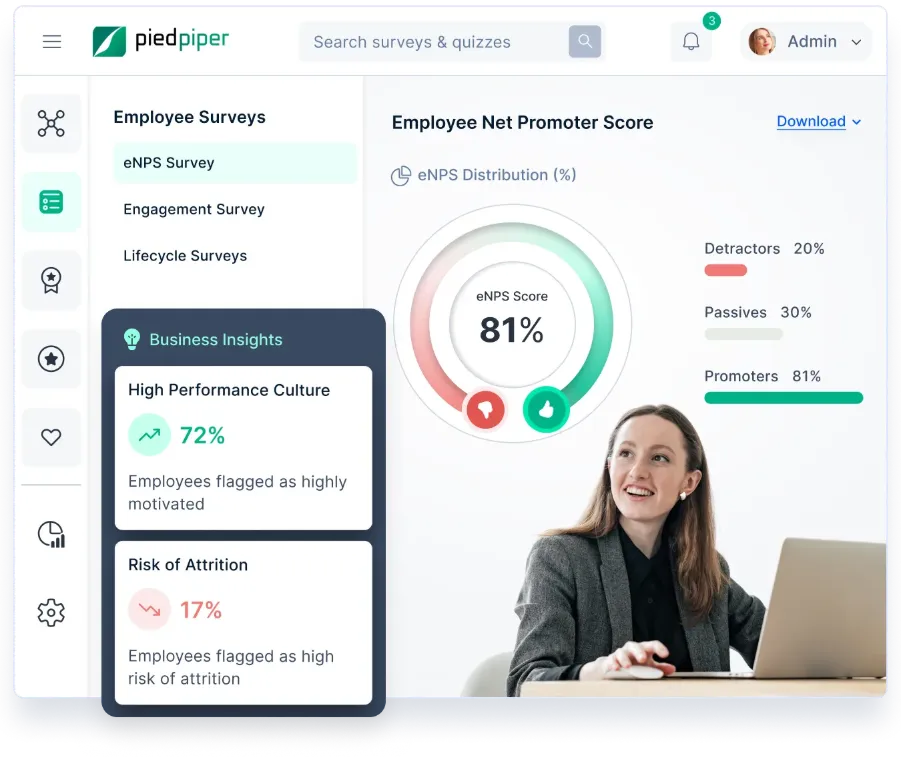
Here’s how Empuls supports upward feedback:
✅ Anonymous feedback surveys
Empuls enables employees to share honest input through anonymous feedback channels. You can run scheduled or on-demand surveys during performance reviews, pulse checks, or team retrospectives.
Use Case: Run quarterly upward feedback surveys with structured questions like:
- “What should your manager continue doing?”
- “What could they do differently to better support you?”
✅ Custom feedback templates
Admins or HR can use ready-made feedback templates or create their own—ensuring feedback aligns with company values and leadership expectations.
✅ AI-powered insights for managers
Empuls doesn’t stop at collecting feedback. It uses AI to:
- Summarize open-ended responses
- Highlight patterns across teams
- Recommend actionable steps for improvement
Managers get visibility into what their team needs—without needing to dig through raw data.
✅ Continuous listening with lifecycle surveys
Collect upward feedback at key moments in the employee lifecycle—onboarding, after project completion, and even during offboarding. This ensures managers receive timely input to adjust and grow.
✅ Safe & scalable
Empuls ensures data privacy and builds a safe space for employees to share feedback without fear. Whether you're a 50-person startup or a 10,000-employee enterprise, Empuls scales with your needs.
Bonus: You can integrate Empuls with tools like MS Teams, Slack, or Outlook to collect upward feedback in the flow of work—no switching tabs, no friction.
Whether you're just starting to introduce upward feedback or looking to make it a deeper part of your culture, Empuls provides everything you need—from templates to insights to action.
Conclusion
Upward feedback is a powerful tool for building better leaders, stronger teams, and a culture of open communication. It gives employees a voice and helps managers lead with awareness, empathy, and impact.
By understanding the meaning of upward feedback, why it matters, and how to give it effectively—with real, actionable examples—organizations can turn feedback into a habit that drives continuous growth.
With platforms like Empuls, upward feedback becomes easy to share, analyze, and act on—making it a natural part of your workplace culture.