On this page
What makes certain leaders memorable, respected, and deeply trusted—even during times of uncertainty? The answer lies in resonant leadership.
Unlike traditional leadership models focused solely on tasks and outcomes, resonance in leadership emphasizes emotional connection, trust, and compassion. This people-first approach is increasingly essential in today’s hybrid and high-burnout workplaces.
In this blog, we explore:
- The resonant leadership definition and how it compares to dissonant leadership
- The core pillars that define resonant leadership styles
- Why resonance drives higher employee engagement, loyalty, and performance
- Actionable examples and data-backed insights from Harvard Business Review and NIH
- How platforms like Empuls help leaders scale resonant leadership with AI, automation, and personalization
Whether you're a team manager, HR professional, or senior leader, this guide will help you lead with empathy, clarity, and emotional intelligence.
What is resonant leadership?
Resonant leadership is a leadership style built on the foundation of emotional intelligence, empathy, and authentic human connection. Introduced by Daniel Goleman, Richard Boyatzis, and Annie McKee in their groundbreaking book Primal Leadership, this approach emphasizes that the most effective leaders are those who create harmony—what the authors refer to as “resonance.”
“Resonant leaders are attuned to the emotions of others and use this awareness to guide and inspire people.” — Daniel Goleman, Primal Leadership
At its core, the resonant leadership definition involves being mindful, compassionate, and emotionally intelligent in how you lead people—especially during change, stress, or uncertainty. It’s not just about what leaders do, but how they make people feel.
In contrast, dissonant leadership—marked by emotional disconnection, transactional behavior, or high control—creates tension and disengagement. While dissonant styles may drive short-term performance, they often lead to long-term burnout, alienation, and attrition. In the conversation around resonant vs dissonant leadership, it’s clear that resonance fuels trust and motivation, while dissonance drains them.
According to a 2022 study published in the National Institutes of Health (NIH), emotionally intelligent leadership was strongly correlated with lower burnout and improved psychological well-being among employees, especially in high-pressure environments. Meanwhile, Harvard Business Review notes that resonant leadership styles consistently lead to teams that are more collaborative, resilient, and purpose-driven.
Whether you're leading a small team or an enterprise-wide transformation, embracing resonance in leadership is not just good practice—it’s a strategic advantage.
The 4 pillars of resonant leadership
Effective resonance leadership is grounded in four key pillars that help leaders foster emotional connection, alignment, and motivation. These pillars not only define resonant leadership styles, but also serve as daily guiding principles for emotionally intelligent and impactful leadership.
1. Emotional intelligence
Emotional intelligence (EI) is the foundation of resonant leadership. It includes self-awareness, self-regulation, empathy, and social skills—all essential to building strong, trust-based relationships.
In practice:
A resonant leader notices when an employee is disengaged, not through metrics, but through subtle cues in behavior or tone. Instead of escalating performance concerns, they initiate a personal check-in, listen actively, and uncover the root cause—be it burnout, workload, or personal stress.
Empuls enables emotionally intelligent leadership with AI-powered sentiment analysis and mood tracking tools like the Moodometer, helping managers understand emotional trends across teams. Leaders get real-time insights to act on disengagement before it escalates.
2. Mindfulness
Mindfulness is the ability to stay present, aware, and intentional. It prevents reactive decision-making and enables thoughtful leadership, especially in high-pressure environments.
In practice:
During a stressful organizational change, a mindful leader does not respond to uncertainty with top-down directives. Instead, they pause, gather team inputs, and communicate with transparency and calm. This fosters trust and minimizes panic.
Features like pulse surveys and lifecycle feedback allow leaders to stay continuously informed without micromanaging. Real-time feedback loops support a more responsive, mindful approach to leadership decision-making.
3. Compassion
Compassion extends beyond empathy. It involves taking intentional action to support others, especially in moments of stress or vulnerability. It is central to resonance in leadership and is closely tied to psychological safety.
In practice:
A compassionate leader notices a team member struggling post-return from leave. Rather than pushing for immediate results, they offer a flexible schedule, recommend wellness resources, and redistribute work temporarily. This act signals care and reinforces loyalty.
Empuls integrates with wellness benefits, mental health resources, and fringe benefit wallets, enabling leaders to proactively support employees’ well-being. Through automation, leaders can trigger personalized gestures like wellness rewards or check-ins without delays.
4. Vision and hope
A resonant leader provides more than direction—they offer a compelling vision and inspire hope, particularly during uncertainty. This sustains motivation and strengthens collective purpose.
In practice:
In a flat-growth quarter, a leader doesn’t ignore the dip. Instead, they share a long-term plan, acknowledge team efforts, and reinforce how every role contributes to the bigger picture. This turns potential frustration into renewed focus.
With social intranet features, Empuls helps leaders broadcast vision-aligned messages via spotlight posts, townhalls, and AMAs. Leaders can also celebrate small wins using recognition and Wall of Fame—keeping hope alive and visible.
Together, these pillars create resonant leadership styles that are not only emotionally attuned, but operationally effective. By combining these traits with the right tools, leaders can drive sustainable engagement and loyalty across teams.
Why resonant leadership drives employee engagement
https://hbr.org/2012/04/the-resonant-team-leader
https://pmc.ncbi.nlm.nih.gov/articles/PMC8790548/
Employee engagement is no longer a “nice-to-have” — it’s a key driver of performance, innovation, and retention. Resonant leadership plays a critical role in shaping workplace environments where engagement can thrive. The emotional connection fostered by resonant leaders directly impacts how employees feel, perform, and stay committed.
According to a study published by the National Institutes of Health, leaders who exhibit emotional intelligence—a core component of resonant leadership—significantly reduce burnout levels and improve psychological well-being among employees. The same study found that emotionally attuned leadership was positively associated with job satisfaction, especially in high-stress industries.
In another insight from Harvard Business Review, resonant leadership styles were shown to boost team collaboration, creativity, and adaptability. Teams led by resonant leaders not only perform better under pressure, but they also show a higher sense of belonging and resilience.
Here’s how resonance in leadership influences key engagement metrics:
- 57% lower attrition: Organizations with emotionally intelligent leaders see significantly reduced turnover, as employees feel seen, valued, and supported.
- 76% increase in team performance: Resonant leaders build trust and psychological safety, enabling teams to take risks, innovate, and collaborate more effectively.
- 5x more likely to be engaged: Employees who feel their leader genuinely cares about their well-being are five times more likely to be engaged at work.
This leadership style also enhances communication quality, a well-known predictor of engagement. Resonant leaders foster open, two-way communication, making space for employee feedback and acting on it—further reinforcing trust and alignment.
Empuls strengthens this cycle by giving leaders visibility into team sentiment through real-time dashboards, survey insights, and nudges. By surfacing early signals of disengagement, the platform empowers leaders to step in with empathy—strengthening emotional connections before productivity or morale are affected.
In today’s distributed, hybrid, and emotionally complex work environments, resonant leadership is more than a style—it’s a competitive advantage. It helps companies build cultures that are not only high-performing but deeply human.
How Empuls empowers resonant leadership at scale
While the concept of resonant leadership is grounded in human connection, its consistent application across growing, hybrid, and global teams can be complex. That’s where Empuls helps scale resonance in leadership—by offering AI-powered, insight-driven tools that support mindful, compassionate, and emotionally intelligent leadership.
Here’s how Empuls enables resonant leadership styles across key people management touchpoints:
1. Recognition and appreciation
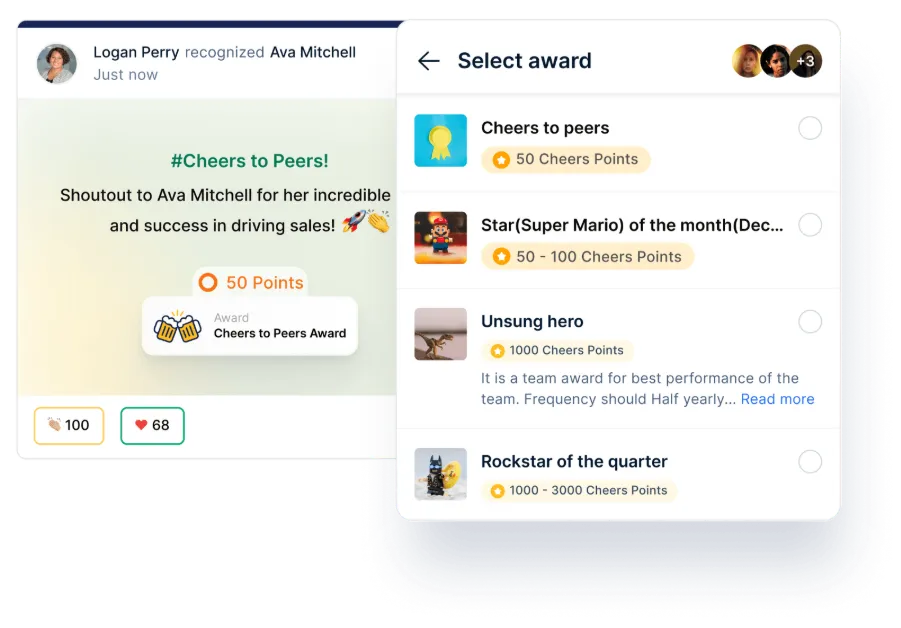
Empuls automates and democratizes recognition, ensuring no achievement goes unnoticed and that appreciation is timely, authentic, and values-aligned.
- Peer-to-peer, spot, nomination-based, and milestone awards
- AI-generated recognition nudges to close visibility gaps
- Smart award suggestions tailored to recent performance or contribution
- Leaderboards and Wall of Fame to make appreciation visible and inspiring
2. Listening and feedback
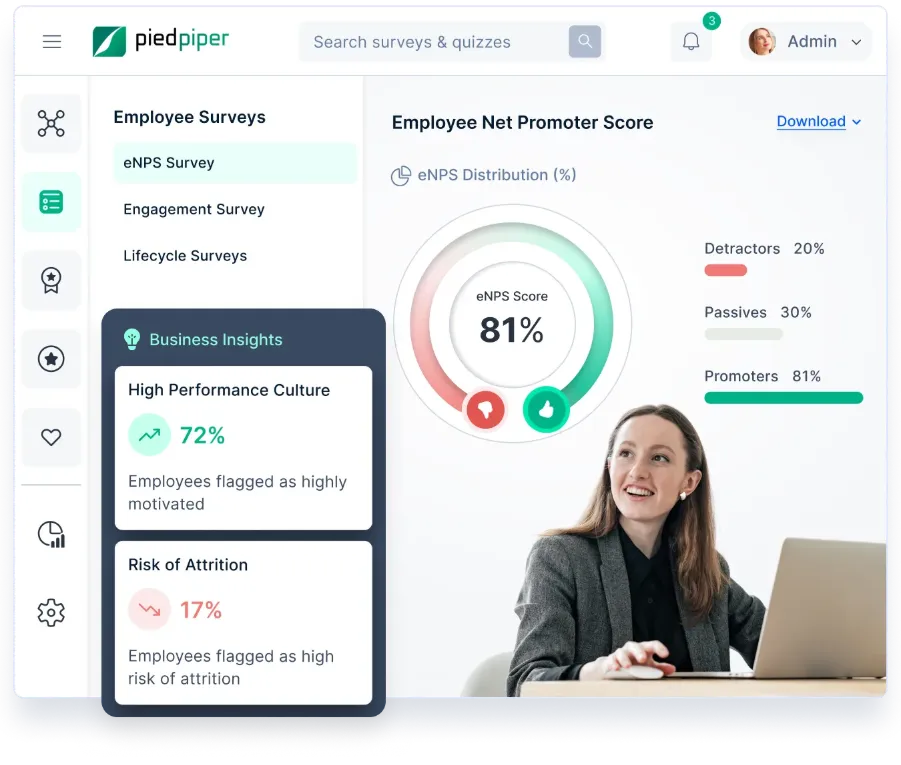
Empuls enables continuous listening through surveys and pulse checks—helping leaders stay emotionally attuned to their teams and act on what matters most.
- eNPS, pulse, and lifecycle surveys
- AI-powered sentiment analysis for deeper insights
- Moodometer to capture real-time emotional tone
Action planning tools to close the feedback loop.
3. Well-being and care

Compassionate leaders support the holistic well-being of their people. Empuls integrates health, wellness, and financial care benefits to help leaders act on their concern with meaningful resources.
- Lifestyle Spending Accounts (LSA) for mental, physical, and financial wellness
- Prepaid tax-saving benefits (fuel, meals, telecom, books)
- Wellness catalog: gym memberships, therapy, preventive care
Automated gifting for key life events: onboarding, new home, family milestones.
4. Communication and alignment
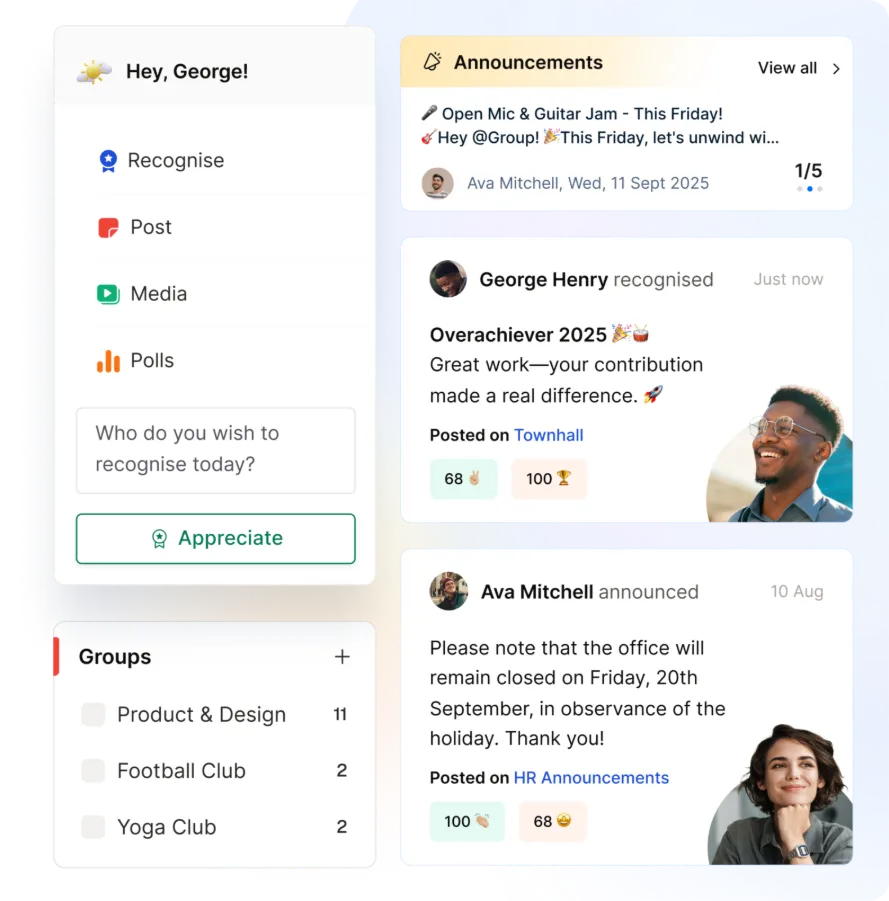
Empuls functions as a social intranet, helping leaders communicate transparently, share vision, and drive emotional alignment across hybrid teams.
- Personalized homepages with curated content feeds
- Spotlight posts, polls, townhalls, and AMAs
- Community groups based on interests, projects, or functions
Digital wishboards for birthdays, anniversaries, and peer shout-outs
5. Predictive insights and nudges
Empuls uses Agentic AI to equip leaders with the data they need to lead better—without replacing human intuition. The system nudges leaders to act before disengagement sets in.
- Recognition gap alerts and suggestions
- Attrition risk predictions tied to recognition and feedback trends
- Personalized dashboards for team health and engagement
- Award coaching and feedback templates for emotionally intelligent messaging.
Empuls doesn’t replace human connection. It amplifies it—by giving leaders the insights, nudges, and tools they need to make emotionally intelligent decisions at scale. In doing so, it enables true resonant leadership—measurable, meaningful, and modern. Schedule a call now!
Become a resonant leader with practical tips
Resonant leadership isn’t just an instinct—it’s a practice. While some leaders may naturally exhibit emotional intelligence or compassion, most need tools, habits, and self-awareness to consistently show up with intention.
Here are practical steps to help you lead with resonance in leadership—even in high-growth, high-pressure environments:
1. Start every week with emotional check-ins
Set aside time to ask your team not just what they’re working on, but how they’re feeling about it. You’ll foster deeper psychological safety and catch issues early.
- Use Empuls' Moodometer or anonymous pulse surveys to gather emotional cues quickly.
2. Recognize contributions in the flow of work
Timely appreciation is a hallmark of resonant leadership styles. Don’t wait for review cycles—make recognition a daily leadership habit.
- Empuls nudges you when someone is overdue for recognition and offers tailored award suggestions to make appreciation effortless.
3. Act on feedback with speed and transparency
Don’t let feedback sit in dashboards. Create action plans, assign owners, and close the loop. Resonant leaders show employees that their voice drives change.
- Empuls surveys come with AI-powered sentiment analysis and built-in action planning tools to make this seamless.
4. Create space for human connection
Leaders often default to task-first communication. Instead, balance that with intentional human moments—townhalls, group shout-outs, or personal 1:1s.
- Use Empuls’ social intranet, community groups, and digital celebration walls to foster connection even in remote setups.
5. Invest in your team’s well-being
Resonant leaders don’t just acknowledge stress—they offer resources to help. Be proactive in recommending wellness tools, benefits, or recovery time.
- Empuls supports wellness-driven leadership with LSA accounts, fringe benefits, wellness catalogs, and automated wellness gifting.
6. Reflect and recalibrate your leadership approach
Take time regularly to evaluate how your leadership style impacts your team’s energy and engagement. Ask yourself:
- Have I been present?
- Have I listened and acted?
- Have I acknowledged both effort and emotion?
Empuls' engagement dashboards and team-level insights help you quantify this impact and course-correct with precision.
Consistent, emotionally intelligent leadership builds trust. When paired with the right technology, it also becomes scalable. With tools like Empuls, any manager—whether leading five people or five hundred—can practice resonant leadership with clarity, empathy, and confidence.
Final thoughts: Resonant leadership is a culture, not just a capability
Resonant leadership isn’t reserved for charismatic visionaries or emotionally gifted managers. It’s a practice—one that can be cultivated, enabled, and amplified across your organization. When leaders commit to being emotionally present, compassionate, and aligned with purpose, they don’t just lead better—they inspire better work, deeper trust, and stronger engagement.
Discover how Empuls helps leaders connect authentically, act with empathy, and drive measurable impact across teams.
👉 Book a demo today and build a culture of emotionally intelligent, high-performing leadership.
FAQ's
What are some resonant leadership examples?
A few common examples include:
- A manager recognizing a teammate’s behind-the-scenes contributions during a project wrap-up.
- A leader addressing company-wide layoffs with transparency and compassion, acknowledging the emotional weight of the moment.
- A team lead adjusting timelines to accommodate personal challenges faced by an employee, while offering wellness support.
- A director hosting regular townhalls to align teams on purpose, values, and appreciation.
These moments reflect resonant leadership by creating emotional alignment, trust, and motivation.
How to assess thought leadership resonance?
You can assess thought leadership resonance by measuring:
- Emotional impact: Are people inspired or moved to act?
- Engagement metrics: Comments, shares, and qualitative feedback from audiences.
- Internal feedback: Do teams feel more connected to the leader’s message?
- Cultural alignment: Does the messaging reinforce core values and purpose?
Empuls supports this by enabling leaders to gather sentiment through surveys, spotlight posts, and AMA sessions—making resonance measurable.
What is resonant vs dissonant leadership?
Resonant leadership is grounded in emotional intelligence, empathy, and alignment—it creates harmony and trust. In contrast, dissonant leadership is emotionally distant, overly directive, and often transactional, which can create anxiety, disconnection, and disengagement.
The difference between resonant vs dissonant leadership often determines whether a team thrives or merely survives. While both can drive short-term performance, only resonant leadership builds long-term engagement and well-being.
What are some characteristics of resonant leadership?
Key characteristics of resonant leadership include:
- Emotional intelligence (self-awareness, empathy, regulation)
- Mindfulness and presence
- Compassionate action
- Vision and the ability to instill hope
- Consistent communication and transparency
- Active listening and adaptability
- A commitment to building trust and psychological safety
Empuls enables these traits through smart nudges, feedback tools, recognition workflows, and wellbeing integrations—helping leaders turn intent into impact.