Mandatory Health Check-ups Under Indian Labour Code 2025: What Employers Must Know
Mandatory checkups for 40+ are required under the annual health check up in India as per labour law. See what employers must deliver, how audits assess labour law work place health and safety, and execution under health and safety of labour law.
On this page
On November 21, 2025, India officially rolled out the four Labour Codes—quietly ushering in one of the biggest shifts in employer responsibility in decades. Among the many updates sits a requirement most companies are still overlooking annual health checkups are now mandatory for every employee above 40 years of age.
Not optional. Not a best practice. A legal obligation.
This means every organization, regardless of size or industry, must provide free annual health screenings to eligible employees—yet the vast majority are nowhere close to prepared. Current industry participation averages just 35%, a figure that will fall drastically short during compliance audits.
Below, we break down what the law actually mandates, why preventive healthcare has suddenly become the most critical benefit in your HR portfolio, and what it takes to operationalize these requirements without overwhelming your teams—especially now that annual health check-up in India as per labour law is a board-level compliance topic.
Labour Code 2025: What changed overall
India's labour regulations were built in the pre-Independence era, most from the 1930s through 1950s. They were fragmented, complex, and struggled to keep pace with how work actually happens today.
The four new codes are:
- Code on Wages, 2019 - Universal minimum wages, timely payment, gender equality
- Industrial Relations Code, 2020 - Trade unions, fixed-term employment, faster dispute resolution
- Code on Social Security, 2020 - EPF, ESIC, gratuity, maternity benefits for all workers
- Occupational Safety, Health and Working Conditions Code, 2020 - Workplace safety, migrant worker protections, health requirements
The consolidation means: one registration instead of six, one license, one return filing. Compliance gets simpler. Worker protections get stronger, especially around health and safety of labour law requirements.
The mandate redefining employer responsibility: Annual health checkups
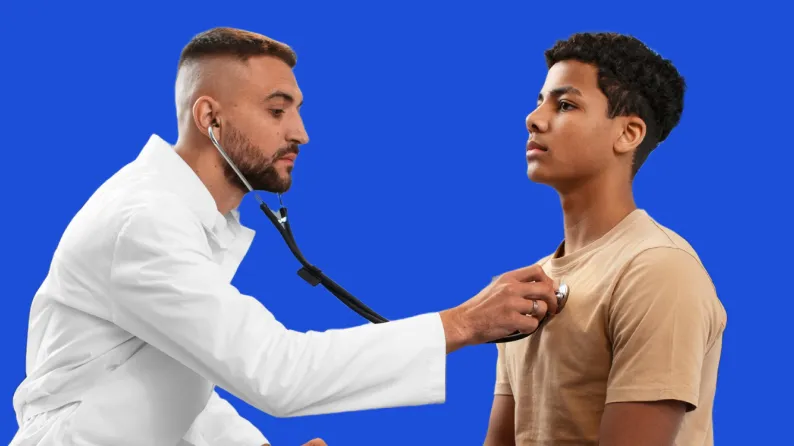
The Occupational Safety, Health and Working Conditions Code introduces one of the most significant compliance shifts HR teams will navigate in 2026: every employee aged 40 and above must receive a free annual health checkup, funded entirely by the employer.
This isn’t a footnote or an optional guideline—it’s a statutory requirement.
As per the government’s notification, employers are obligated to provide an annual medical examination to all workers over 40. The responsibility sits squarely with the organization, making annual health check-up in India as per labour law a direct employer duty, not an insurer add-on.
The mandate requires employers to ensure checkups are provided, not simply list them as part of a benefits package. If the majority of your workforce never completes them, regulators may question whether the requirement is truly being met.
To stay compliant, HR needs more than a policy—they need a scalable preventive health care platform that drives participation, closes gaps, and guarantees execution. A passive benefit won’t cut it in 2026.
Mandatory health check-ups under labour code 2025: What employers must know
The implementation of the Occupational Safety, Health and Working Conditions (OSHWC) Code, 2020—effective 21 November 2025—introduces one of the most consequential compliance shifts for Indian employers: mandatory, employer-funded annual health check-ups for all workers aged 40 and above.
This requirement is not advisory. It is a legal obligation applicable across industries, establishment sizes, and employment categories. The Code explicitly states that employers must provide free annual health check-ups, placing preventive care as a cornerstone of India’s modernized labour framework and labour law workplace health and safety expectations.
1. Annual health screening for all employees aged 40+
Employers must ensure each eligible worker receives a complete health check-up every year—without exception.
2. 100% employer-funded check-ups
No cost-sharing, no reimbursement model.
The check-up must be paid for entirely by the employer.
3. “Provide” ≠ “Offer” — the compliance language matters
The legal mandate requires employers to provide the check-up—not merely include it in a benefits brochure.
This distinction transforms health check-ups from a passive benefit to an active compliance requirement.
4. Applies across workforce categories
Whether workers are permanent, contract, fixed-term, MSME workers, or in hazardous industries, the mandate applies.
The OSHWC Code extends free annual health check-ups to:
- Contract workers
- MSME workers
- Dock workers
- Mine workers
- Hazardous industry workers
- Export workers
What the health check-up mandate means for employers
While the legal requirement is clear, execution is where most companies will struggle.
The utilization gap is the real compliance gap
A survey found that even when employers offer wellness programs with health screenings, participation remains limited. In this survey, only 46% of employees completed an employer-sponsored health screening, and among those who were flagged as needing further intervention, only a fifth or fewer actually enrolled in additional workplace wellness activities—highlighting how low engagement can undermine preventive health efforts.
Under the new Codes, this becomes a compliance risk: if employees are not participating, can an employer truly claim to have “provided” the benefit? This is where annual health check-up in India as per labour law moves from policy to proof.
Low participation = compliance exposure
A company offering health check-ups is not the same as a company providing them in the eyes of the law.
Regulators will want to see:
- Actual participation rates
- Proof of completed screenings
- Follow-up processes for at-risk workers
- Outreach and communication logs
Employers operating at the industry-average 35% utilization will fall short of compliance expectations tied to labour law work-place health and safety.
High-performing employers hit 70–80%+ utilization
Organizations that successfully operationalize this mandate:
- Make check-ups easy to schedule
- Deliver screenings onsite or via integrated health partners
- Automate reminders and follow-ups
- Provide digital access and mobile-first workflows
- Offer coordinated care pathways for identified risks
Execution is now as important as intent
The mandate requires employers to:
- Build preventive-care workflows
- Track participation
- Prove delivery
- Maintain records for audit readiness
The check-up requirement is no longer a benefit—it is a statutory operating process under health and safety of labour law.
Why this mandate requires immediate action by HR teams
Here is how mandatory health check-ups under new Indian Labour Code required immediate action:
1. It affects every HR, admin, and compliance process in 2026
Workforce planning, insurance design, L&D, wellness programs, and shift scheduling all need updates.
2. It applies across industries—not only hazardous work
From IT to manufacturing, from MSMEs to large enterprises, the mandate remains the same across industries—and strengthens baseline labour law workplace health and safety responsibilities.
3. Records will be critical during inspections
With the Codes introducing an “Inspector-cum-Facilitator” model, digital documentation and traceability become essential.
4. Worker health is now tied to employer responsibility
Preventive healthcare is positioned as a national priority—meaning enforcement will be strict, especially for annual health check-up in India as per labour law obligations.
Why smart companies are treating this as an opportunity, not an obligation
Most HR reforms add paperwork. But the situation has changed under the new labour code. It mandates organizations to build something far more valuable—a preventive health infrastructure that can reshape workforce wellbeing for the next decade and significantly reduce long-term health risk.
For years, HR teams have struggled with rising insurance premiums, chronic disease cases, absenteeism, and burnout; yet they lacked both the mandate and the tools to intervene early. The new annual health check-up requirement finally creates the structural push organizations needed to shift from reactive healthcare to proactive prevention.
Forward-thinking companies understand this. They’re treating the mandate as a strategic opportunity rather than a compliance burden using it to strengthen workforce resilience and deliver stronger outcomes under health and safety of labour law. Here’s why:
1. Early detection prevents catastrophic costs later
Annual health screenings uncover risks long before they turn into medical emergencies. Corporate health data across India consistently shows that routine checkups detect:
- Hypertension at 170–200 levels
- Early-stage diabetes—often 2–4 years before symptoms
- Liver & kidney stress markers linked to sedentary roles
- Cardiac indicators that precede sudden cardiac events
A ₹5,000 screening preventing a ₹15–20 lakh ICU event isn’t a theoretical scenario—it’s a pattern insurers report every year.
Early detection sharply reduces:
- Sudden spikes in sick leave
- Productivity loss from unmanaged conditions
- Emergency hospitalizations
- High volatility in insurance claims
This isn’t an expense. It’s the highest-ROI risk-prevention investment a company can make.
2. Health checkups unlock workforce intelligence HR never had
Until now, HR has been forced to rely on fragmented, reactive signals:
- Engagement scores → too broad
- Sick leave → too late
- Insurance claims → far too late
Annual screenings create the missing early-warning system—giving employers a proactive way to improve labour law workplace health and safety outcomes.
For the first time, employers can answer:
- Which teams are trending toward metabolic or cardiac risk?
- Which offices show ergonomic or stress-related patterns?
- What age groups need targeted wellness interventions?
- Which habits predict future claims or burnout?
This shifts HR from assumption-driven decision making to data-driven forecasting.
3. A culture of health emerges when participation becomes the norm
Traditional wellness programs fail because participation rarely exceeds 20–35%.
The health check-up mandate changes the baseline entirely.
When 70–80% of employees complete annual screenings and understand their results:
- Health becomes an everyday conversation
- Preventive care becomes habitual, not optional
- Managers can intervene before burnout or illness escalates
- Insurance premiums stabilize instead of rising unpredictably
- Employees feel supported, valued, and invested in
This is not a one-off wellness campaign. It’s health as company culture.
How HR teams can use modern solutions for employee health benefits administration
Xoxoday and its benefits marketplace for employee health benefits—especially to operationalize annual health check-up in India as per labour law at scale:
1. Automated checkup reminders, scheduling & follow-up journeys
Most companies struggle not with offering health checkups—but with ensuring that employees actually complete them. Xoxoday solves this by automating the entire journey from start to finish.
How it works:
Xoxoday helps HR create automated workflows (“Journeys”) that send timely nudges, reminders, and confirmations across multiple channels. Employees receive personalized alerts and can track their progress until the screening is complete—driving higher participation and audit readiness for health and safety of labour law requirements.
What we automate:
- Pre-checkup awareness campaigns
- Registration & scheduling reminders
- Follow-up notifications for pending checkups
- Post-checkup wellness guidance
- Multi-channel alerts via email, Slack, Teams, mobile & in-app
This makes participation the default—not the exception.
2. Incentives & rewards for screening completion
Behavior change requires motivation—and Xoxoday embeds recognition directly into the checkup cycle.
How it works:
When employees complete annual screenings, Xoxoday can automatically award points, badges, or digital rewards. These can be redeemed through the Xoxoday Rewards Marketplace, making health engagement instantly gratifying.
Reward options include:
- Gift cards across global brands
- Wellness rewards (fitness, nutrition, meditation)
- Experience-based rewards
- Team or department-level recognition badges
This psychologically reframes health screenings as rewarding, not mandatory—boosting participation significantly.
3. Wellbeing challenges that reinforce healthy habits
Annual checkups identify risks, but what employees do after the screening determines long-term health outcomes. Xoxoday helps employees build sustainable habits through gamified engagement.
How it works:
The platform lets HR run wellbeing programs—steps, hydration, meditation, mental health streaks, nutrition plans—that guide employees into healthier routines.
Challenge formats supported by Xoxoday:
- Step and activity challenges
- Mindfulness & stress-reduction streaks
- Sleep routines & digital detox goals
- Nutrition and hydration competitions
- Team-based health challenges
This turns preventive health into a cultural movement, not a one-day event.
4. Telehealth, OPD, fitness & lifestyle benefits access
Screenings only matter when employees take follow-up action.
Xoxoday bridges the gap between diagnosis and care by offering integrated benefits.
How it works:
Through the Xoxoday Benefits Marketplace, employees gain direct access to services that support their physical and mental wellbeing.
Benefits include:
- Telemedicine consultations
- OPD & diagnostic test discounts
- Fitness & gym memberships
- Mental wellness programs
- Nutritionist consultations
- Lifestyle & stress-management resources
Employees move seamlessly from screening → awareness → action.
5. Converting screening insights into actionable wellbeing plans
Most companies receive health screening data but lack the tools to turn it into meaningful outcomes.
Xoxoday enables intelligent, targeted health interventions.
How it works:
HR teams can segment employees based on risk indicators and assign tailored wellness programs. Xoxoday then sends consistent nudges and tracks participation.
Examples of targeted interventions:
- Ergonomic programs for high-risk office teams
- Diabetes prevention tracks for pre-diabetic indicators
- Stress & sleep programs for burnout-prone roles
- Nutrition plans for metabolic or weight-related risks
This elevates HR from reactive support to strategic workforce wellbeing management.
6. Spotlighting healthy habits through employee communities
Cultural adoption matters just as much as participation.
Xoxoday creates social momentum by celebrating health actions publicly.
How it works:
Xoxoday has a built-in social feed (“The Wall”) for recognition and community engagement. Employees share achievements, milestones, and wellness wins—turning wellbeing into a shared, motivating experience.
Community engagement includes:
- Public shoutouts for completing screenings
- Celebrating wellness challenge winners
- Sharing health journeys and success stories
- Leadership recognition for wellbeing champions
This normalizes preventive care and builds a health-first culture.
7. Nudges for doctor consultations & ongoing wellness
Screenings identify risks—nudges ensure employees act on them.
How it works:
Targeted nudges close the loop: reminders to consult a doctor, enroll into a relevant wellness track, or redeem appropriate health benefits, ensuring the mandate translates into real preventive care and stronger labour law workplace health and safety delivery.
Nudges may include:
- “Your report indicates high cholesterol—book a telehealth call.”
- “You’re eligible for a fitness plan based on your results.”
- “Join the metabolic health challenge starting Monday.”
- “Here’s a personalized nutrition program recommended for you.”
This closes the loop between screening → awareness → action → sustained improvement.
Wrapping up
Mandatory annual health checkups under Labour Code 2025 mark a decisive shift in how organizations approach labour law workplace health and safety. What was once a voluntary wellness benefit is now a statutory obligation, requiring proof of delivery, participation, and follow-through.
Employers that act early can not only stay compliant with annual health check-up in India as per labour law, but also build stronger, healthier, and more resilient workforces aligned with the health and safety of labour law.
Schedule a demo to see how Xoxoday can help you turn mandatory health checkups into a sustainable wellbeing advantage.
FAQs
What does workplace health and safety mean in labour laws?
Workplace health and safety under labour laws means an employer’s legal duty to ensure safe working conditions, prevent occupational risks, and protect employees’ physical and mental wellbeing at work.
What is labour law workplace health and safety?
Labour law workplace health and safety refers to the rules that require employers to maintain safe workplaces, manage health risks, and prevent injuries or illness under the Occupational Safety, Health and Working Conditions Code, 2020.
What is labour law workplace health and safety?
It means the employer’s responsibility under Indian labour laws to create a work environment that does not harm employees’ health or safety and complies with mandated safety and health standards.