On this page
An employee rewards program in Singapore is a structured system that companies use to recognize, incentivize, and retain employees. These programs go beyond salaries and bonuses, offering a mix of monetary and non-monetary rewards that align with employee needs and business goals.
In Singapore’s competitive job market, where resignation rates remain around 1.8% quarterly, organizations are rethinking how to keep talent engaged and motivated. Traditional approaches are giving way to more holistic, flexible, and technology-driven reward strategies.
Common types of employee rewards in Singapore include:
- Performance-based bonuses and spot awards
- Employee referral program rewards (milestone-based)
- Peer-to-peer and manager recognition
- Long service awards and milestone celebrations
- Wellness and lifestyle perks (e.g., gym, mental health, LSA)
- Experience-based rewards and gift cards
- Custom swag and onboarding kits
With a diverse workforce spanning generations, cultures, and work preferences, personalization is key. Modern rewards platforms like Empuls enable companies to deliver timely, localized, and meaningful rewards, across every stage of the employee lifecycle.
In this blog, we’ll explore:
- How employee rewards programmes are designed in Singapore,
- The key levers driving change, and
- How the Empuls platform supports this journey, from onboarding to exit.
Why employee rewards matter in Singapore
Singapore’s labor landscape is evolving at speed—and with it, employee expectations. As businesses recover from post-pandemic disruptions and navigate hybrid work realities, HR teams face heightened pressure to retain top talent while keeping morale high and engagement steady.
According to the Ministry of Manpower, resignation rates have returned to pre-pandemic levels, with 1.8% of employees leaving their jobs every quarter, reflecting a steadily mobile workforce . In particular, younger workers (aged 25–34) showed the highest rates of voluntary turnover, underscoring the need for rewards programs that resonate with millennial and Gen Z values.
At the same time, Singapore’s economy is built on a highly diverse workforce—comprising a mix of local and expatriate employees, spanning multiple age groups, cultures, and professional expectations. A “one-size-fits-all” approach to recognition and rewards no longer works.
A shift beyond compensation
The traditional 13th-month bonus and annual increment system, while still prevalent, has limited impact on long-term engagement. In fact, 80% of Singaporean employees say they would stay longer with an employer who regularly shows appreciation. This clearly illustrates the growing importance of non-monetary motivators—such as career development, personalized rewards, and public recognition.
Employee expectations are evolving
Here’s what employees in Singapore now expect from a modern rewards program:
- Timely and personalized recognition for contributions, not just tenure.
- Autonomy of choice—gift cards, lifestyle perks, or experiences that suit individual preferences.
- Holistic well-being support, including wellness benefits, hybrid work flexibility, and mental health resources.
- Career-enhancing incentives, like learning rewards, project-based bonuses, and employee referral rewards.
Ultimately, today’s workforce wants to feel valued, seen, and rewarded in the moments that matter most—not just during performance reviews or festive bonuses. For employers, this presents a powerful opportunity to turn employee rewards from a cost center into a strategic engagement lever.
Types of rewards that work for Singapore’s workforce
In Singapore’s tight labour market and evolving workforce expectations, organisations that lean into a diversified, personalised rewards mix are gaining an edge. According to the Ministry of Manpower, the average monthly recruitment rate in recent years has hovered around 2.0%, showing that talent remains mobile.
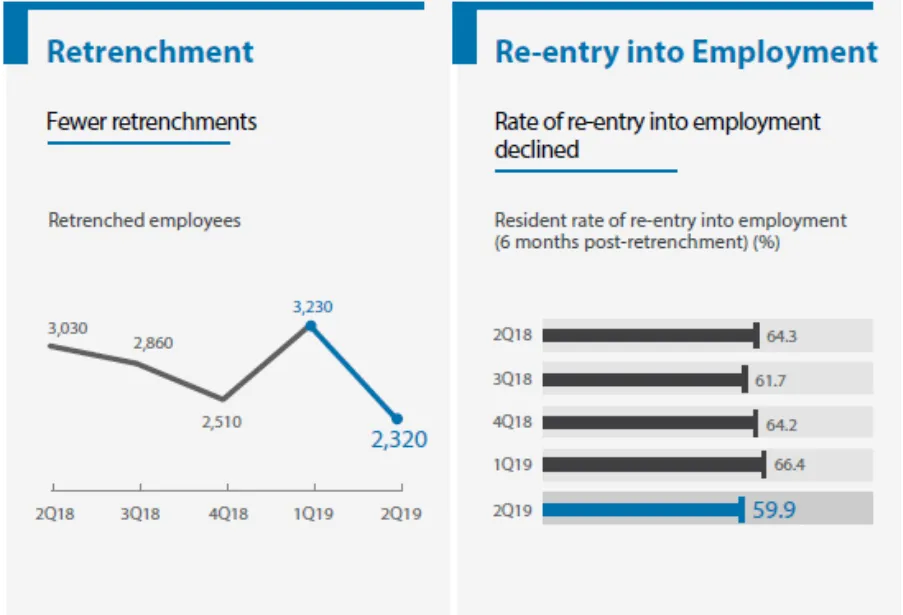
Meanwhile, employment levels in Q3 2025 reached 4,095.9 thousand—an increase of 1.5% yearonyear. These indicators emphasise that HR leaders cannot rely solely on basic compensation—they must deliver rewards that are timely, meaningful and resonant.
1. Monetary & performancelinked rewards
Although pay remains table stakes, the real differentiator is how you link monetary rewards to behaviour, values and referrals. For instance: With basic wages rising, but still moderate, in Singapore (real wage growth for fulltime employed residents remained constrained), organisations must make every dollar count.
Empuls supports spot awards, milestone bonuses, and performancebased payouts aligned to business goals (such as referral hires or sales incentives).
Example application: When an employee refers a highperforming hire and stays for 12 months, the employer triggers an automatic reward via Empuls’s referral module—addressing the “employee referral program reward Singapore” target keyword directly.
2. Referral rewards (built into the employee referral programme)
Given the mobility of talent in Singapore, incentivising referrals is critical for retention and costeffective hiring.
With the monthly recruitment rate around 2.0%, referral programmes become an efficient alternative to external hiring.
Empuls offers a dedicated Referral Rewards module that automates reward issuance when a referral is hired, onboarded and passes a milestone threshold.
By tying rewards to the referral lifecycle, HR managers can boost quality of hire and engagement—addressing the keyword “employee referral program reward Singapore”.
3. Recognition & appreciation
Recognition is becoming a pivotal component of total rewards in Singapore. As noted in industry surveys, an estimated 85% + of employees say they’d stay longer when their benefits package meets their needs.
Empuls supports peertopeer recognition, manager recognition, nominationbased awards, and enables social intranet features (Wall of Fame, digital TV mode) that amplify the moment.
This reinforcement of values and behaviours is particularly effective in culturally diverse Singapore workplaces.
4. Wellness, wellbeing & lifestyle perks
Wellbeing is now a strategic lever for engagement and retention. For example, a Singapore survey found that organisations with certified wellbeing programmes maintain higher positive wellbeing scores.
Empuls integrates a robust Health & Wellness catalogue (gym memberships, mentalhealth apps, preventive care, insurance)—making it easy to deploy lifestyle rewards.
HR teams can tailor wellness rewards by employee segment (e.g., younger workforce may prefer mindfulness apps, while experienced employees might value preventive care).
5. Choicebased rewards & experiences
Personalisation is not optional—employees respond to rewards that reflect their individual preferences. Recent Singapore insights emphasise flexibility and perks as powerful differentiators.
Empuls offers a global rewards catalogue (10 M+ options across 100+ countries), enabling employees in Singapore (and crossborder teams) to choose what matters to them—whether egift cards, travel vouchers, staycations, or tech gadgets.
This level of choice supports the keyword “employee rewards program in Singapore”, showing you’re offering fully localised, globalcapable reward options.
6. Career & growthoriented rewards
Especially in Singapore’s competitive talent market, rewards tied to learning, credentials and growth matter. With a highly educated workforce and strong skillsupgrading ecosystem, HR leaders should lean into growth rewards. Base
Empuls enables nominationbased awards, spot rewards for skillachievement, and integrates with HRMS/learning platforms—tying recognition to career and personal development.
7. Milestone & lifecycle rewards
From onboarding, through service anniversaries, to exit—rewards that mark lifecycle moments help build culture and loyalty.
Empuls allows automated reward triggers for milestones (1 year, 5 years, etc) and supports global shipments of swag, personalised packs, etc.
In Singapore, where mobility is high, such milestone rewards help reinforce loyalty at key moments.
Designing a holistic employee rewards program in Singapore
As Singapore’s workforce becomes more diverse, mobile, and experience-driven, HR leaders are shifting away from transactional reward systems toward holistic, employee-centric programs. A successful employee rewards program in Singapore today must be more than a mix of bonuses and gift cards — it must be flexible, inclusive, and aligned to both organisational goals and personal employee values.
Empuls is built around this very principle — helping companies deliver employee rewards that are timely, personalised, scalable, and culturally relevant across regions, including Singapore.
Here are the core pillars of a well-rounded rewards strategy, with each pillar enabled by Empuls:
1. Personalisation at scale
One-size-fits-all rewards no longer work. Employees now expect choice, flexibility, and relevance.
Why it matters in Singapore: The workforce includes locals, expatriates, and permanent residents, each with different expectations. Employees value different things — from wellness subscriptions to weekend staycations.
- Offers 10M+ reward options globally — gift cards, experiences, merchandise, charity donations, prepaid cards.
- Employees in Singapore can redeem rewards in SGD, choose from local merchants (e.g., FairPrice, Grab, Shopee), or global favorites.
- Custom catalogues and flexible LSA benefits allow employers to align rewards to employee lifestyles.
2. Always-on recognition, not just events
Recognition should be continuous, not reserved for year-end reviews or service anniversaries.
Why it matters in Singapore: With an average resignation rate of ~1.8% per quarter, recognition must be frequent and real-time to retain top performers (MOM Statistics).
- Enables peer-to-peer, manager-led, and jury-based awards.
- Automated nudges prompt managers to recognise regularly.
- Wall of Fame (TV & interactive) and digital celebrations boost visibility.
3. Integrated referral & milestone reward flows
Structured reward flows reduce manual admin and ensure no moment goes uncelebrated.
Why it matters in Singapore: With over 4 million employed residents and a highly mobile workforce, companies must double down on referral hiring and milestone recognition.
- Automates employee referral program rewards with milestone-based triggers (e.g., reward when the referral is hired + again at 3 months).
- Supports onboarding packs, birthday wishes, work anniversaries, and LSA-based gifting — all from one dashboard.
4. Recognition tied to company values
Effective reward programs reinforce culture, not just performance metrics.
Why it matters in Singapore: As hybrid teams grow, values-led cultures keep employees aligned.
- Customisable value badges (e.g., #CustomerFirst, #Innovation, #Collaboration).
- Smart insights show which teams are living the values — and which need nudges.
- Gamified leaderboards drive engagement with values
5. Compliance, cost control & automation
Compliance, tax savings, and budget visibility are critical in multi-region teams.
Why it matters in Singapore: Companies must meet MOM guidelines, IRAS tax standards, and ensure fair reward distribution across local and expat employees.
- Supports COLI-based adjustments for fair reward value.
- Budget controls, audit trails, and pay-on-redemption model.
- Tax-compliant reporting for service awards and gifts
6. Deep integration into HR & comms ecosystems
A great program works in the flow of work, not outside it.
Why it matters in Singapore: Distributed teams across APAC need omnichannel access.
- Integrated with HRMS (e.g., Workday, SAP, BambooHR).
- Embedded in Microsoft Teams, Slack, Outlook, and Viva.
- Works on web, mobile, tablets, kiosks, and large screens.
By blending technology, personalisation, and strategic automation, Empuls empowers HR teams to build recognition-first cultures that scale — not just across offices, but across borders.
Trends driving the shift in employee rewards programs in Singapore
Singapore’s workforce is evolving rapidly — and so are employee expectations. For HR leaders and People Ops teams, understanding the changing landscape is essential to designing rewards that truly resonate. Here are the key trends shaping modern employee rewards programs in Singapore:
1. High mobility requires continuous engagement
Singapore’s average quarterly resignation rate is around 1.8%, with younger employees (aged 25–34) driving the majority of voluntary turnover (MOM Labour Turnover). In a mobile job market, long gaps between recognition moments increase the risk of disengagement and attrition.
What’s changing:
- Recognition is becoming continuous, not annual.
- Real-time, in-the-flow appreciation is now essential — not optional
2. Rise of hybrid work demands digital-first rewards
As hybrid and remote work models become mainstream in Singapore, traditional office-based celebrations and rewards are no longer sufficient. Employees need to feel valued — wherever they work from.
What’s changing:
- Rewards are shifting to digital-first formats: e-gift cards, experiences, and swag delivered to the doorstep.
- Mobile, Slack, and Teams integrations are enabling recognition in the flow of work.
3. Well-being as a strategic reward lever
A 2023 report by Great Place to Work® Singapore shows that organisations investing in holistic well-being programs see higher engagement and lower absenteeism. Employees now expect rewards that support mental, physical, and financial wellness.
What’s changing:
- Wellness benefits are being integrated into reward platforms.
- Employers are offering lifestyle allowances and curated wellness catalogs.
4. Flexibility & choice trump one-size-fits-all
With a multi-generational and multi-national workforce, personalisation has become a top priority. Employees want choice — not just in what they’re rewarded for, but also in how they redeem it.
What’s changing:
- Point-based rewards, lifestyle spending accounts (LSA), and flexible benefit wallets are on the rise.
- Employees are choosing rewards aligned to their personal lives — from fitness to travel to donations.
5. Referral programs are tighter, smarter, and automated
With hiring costs rising and quality candidates becoming harder to source, employee referral programs with automated rewards are gaining traction. These programs help employers tap into trusted networks — while boosting engagement.
What’s changing:
- Referral rewards are no longer lump-sum payouts. They’re milestone-based, trackable, and integrated into R&R systems.
- Transparency, automation, and timely recognition are making these programs more effective.
6. Recognition is tied to values and impact
As businesses in Singapore compete not just on pay but on culture, there’s a growing push to align rewards with company values. Recognition is becoming a way to reinforce what matters.
What’s changing:
- Values-based badges, public appreciation, and wall-of-fame visibility are reinforcing culture.
- Data-driven insights show which teams and employees are living the values — and where the gaps are.
7. Data, ai, and insights power smarter recognition
HR teams are under pressure to justify budgets and improve ROI. That’s driving adoption of platforms with analytics, automation, and nudges that help teams recognise consistently and fairly.
What’s changing:
- AI-powered insights highlight who’s being recognised — and who’s not.
- Predictive analytics identify disengagement trends, helping HR intervene before it’s too late.
Rethink rewards for a changing workforce
As Singapore’s talent market evolves, so must your approach to employee rewards. Today’s employees expect more than annual bonuses — they want timely recognition, flexible perks, and a culture that values them every day. Empuls makes this easy.
- Automate recognition and referrals
- Offer 10M+ reward choices
- Personalize perks with LSA
- Stay compliant, scalable, and employee-first
Book a free consultation and build a rewards strategy that truly works — for your people and your business.
FAQ's
What are the employee benefits in Singapore?
Employee benefits in Singapore typically include contributions to the Central Provident Fund (CPF), medical insurance, annual leave, sick leave, and maternity/paternity leave. Many modern employers also offer flexible benefits like wellness allowances, meal and transport subsidies, lifestyle spending accounts (LSAs), and digital perks platforms like Empuls, to cater to a diverse and evolving workforce.
What is an employee rewards system in Singapore?
An employee rewards system in Singapore is a structured approach used by companies to recognize, motivate, and retain talent. It goes beyond salary and bonuses to include performance-based awards, spot recognitions, referral incentives, wellness perks, experience-based rewards, and service anniversaries. Digital platforms like Empuls help automate and personalise rewards across the employee lifecycle, in compliance with local policies and multi-currency needs.
Is 13th month pay mandatory in Singapore?
No, the 13th month bonus (also known as Annual Wage Supplement or AWS) is not mandatory in Singapore. However, it is a common practice, especially in established companies and MNCs. The Ministry of Manpower encourages employers to provide AWS, but it’s ultimately based on employment contracts and company policy.