On this page
Many insurance companies rely on tried-and-tested systems, long-established processes, and strict regulations. These are strengths. But when it comes to employee engagement and culture, they can also create challenges. Routines feel rigid. Recognition often stays formal or delayed. Communication lacks energy. As a result, employees feel disconnected from both their teams and their purpose.
Building a strong culture starts with creating an environment where people feel seen, heard, and valued. Employees want more than tasks and targets. They look for appreciation, connection, and moments that feel meaningful. That’s hard to achieve with spreadsheets, emails, and disconnected tools.
Empuls helps companies shift from fragmented engagement efforts to simple, automated actions that build real connection.
With built-in nudges, surveys, recognition, and feedback tools, HR teams can create consistent moments of appreciation and gather insights without extra effort.
Top culture challenges in insurance companies
Insurance organizations often operate in controlled environments. Policies, processes, and risk management dominate daily operations. While this builds discipline, it can also create distance between employees and the workplace culture.
Here are common challenges that HR and people leaders in insurance face:
1. Delayed or infrequent recognition
Appreciation gets reserved for annual reviews or long-tenure awards. Day-to-day contributions often go unnoticed.
2. Disconnected teams
Field agents, claims processors, underwriters, and support staff rarely engage with each other. Many feel isolated, especially in hybrid and distributed setups.
3. Low visibility into contributions
Wins remain hidden within departments. Managers struggle to track effort, progress, and team morale consistently.
4. Slow feedback loops
Employee feedback stays buried in survey spreadsheets or gets lost in long approval chains. Nothing changes fast enough.
5. Rigid tools and processes
Engagement programs, if any, tend to rely on manual workflows. They require time, effort, and heavy coordination.
6. Attrition in customer-facing roles
Frontline employees often face burnout, lack recognition, and receive little support for well-being or career development.
Without regular recognition, accessible feedback channels, and clear communication, culture turns cold. Morale drops. Retention suffers.
Culture-boosting strategies that work
Small, consistent actions can change how employees feel about their workplace. Insurance companies can build a stronger culture by focusing on five core areas: recognition, connection, feedback, well-being, and motivation.
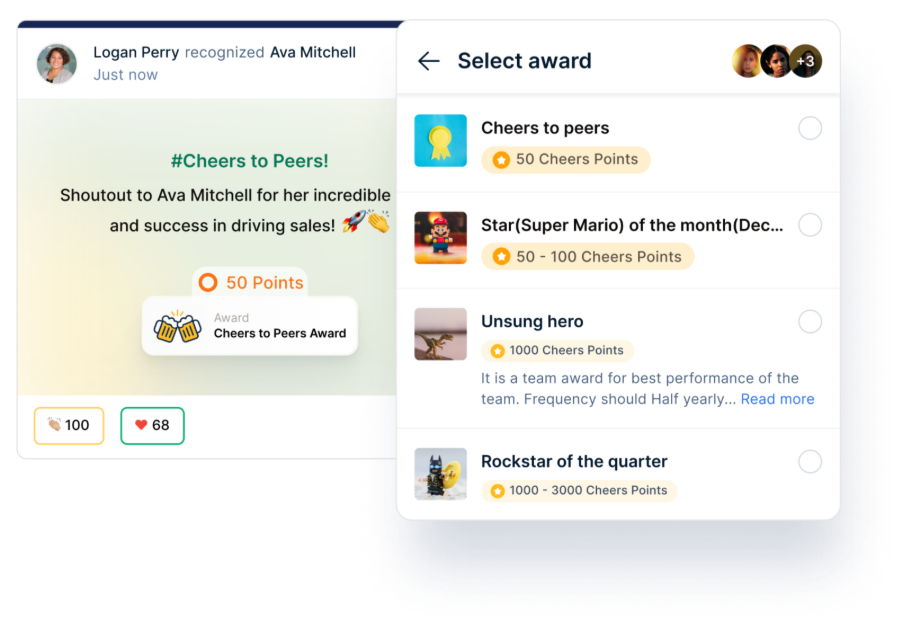
1. Recognize contributions without delay
Set up recognition workflows that don’t require approvals or long waits. Managers and peers should be able to appreciate good work instantly.
- Use spot awards to acknowledge effort during critical claims processing.
- Tie recognition to core values such as accuracy, empathy, or customer service.
- Highlight every award on a shared wall of fame for maximum visibility.
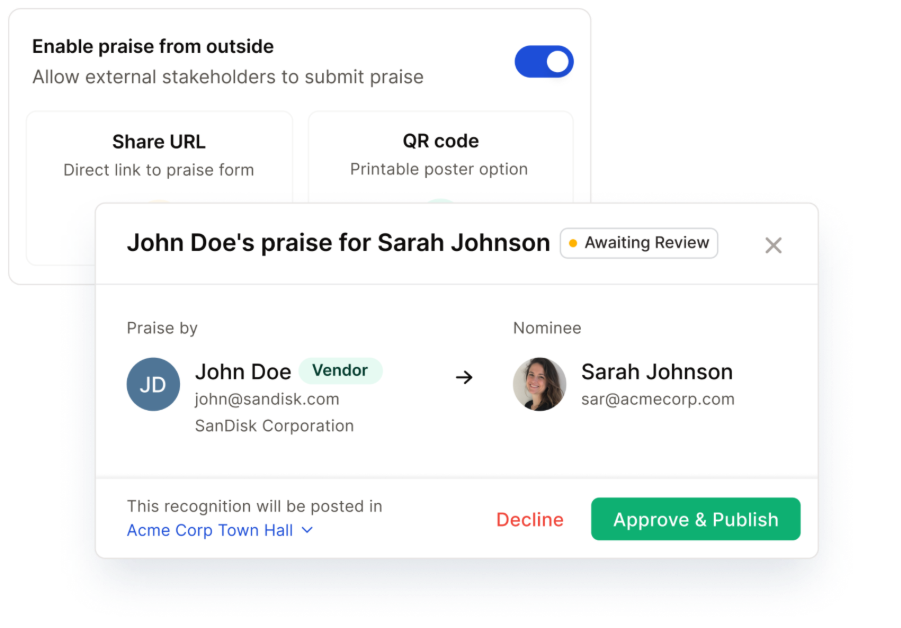
2. Make people feel seen across roles and locations
Move beyond headquarters. Celebrate every team — agents, underwriters, claims handlers, and operations.
- Create a shared feed for achievements, birthdays, and milestones.
- Launch interest-based groups where employees connect beyond roles.
- Share wins, customer appreciation, and recognition across departments.
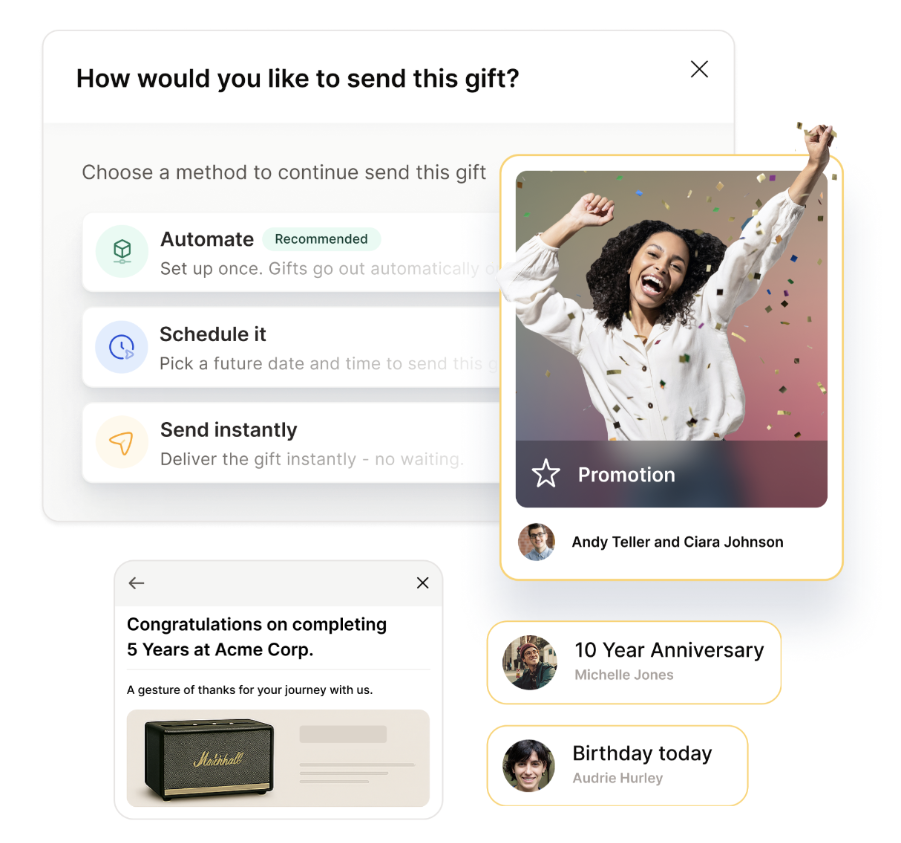
3. Support every milestone with gifting and swag
Add a personal touch to work anniversaries, onboarding, and special occasions.
- Set up automated gifting for birthdays and long service milestones.
- Offer employees reward points they can redeem for items or experiences they actually want.
- Use curated swag packs to welcome new hires or celebrate top performers.
4. Listen closely, act quickly
Employees want to feel heard. Short, frequent surveys work better than long forms that go unanswered.
- Send pulse surveys every few weeks to check morale.
- Use anonymous channels to gather honest feedback.
- Share back the results and actions taken. Transparency builds trust.
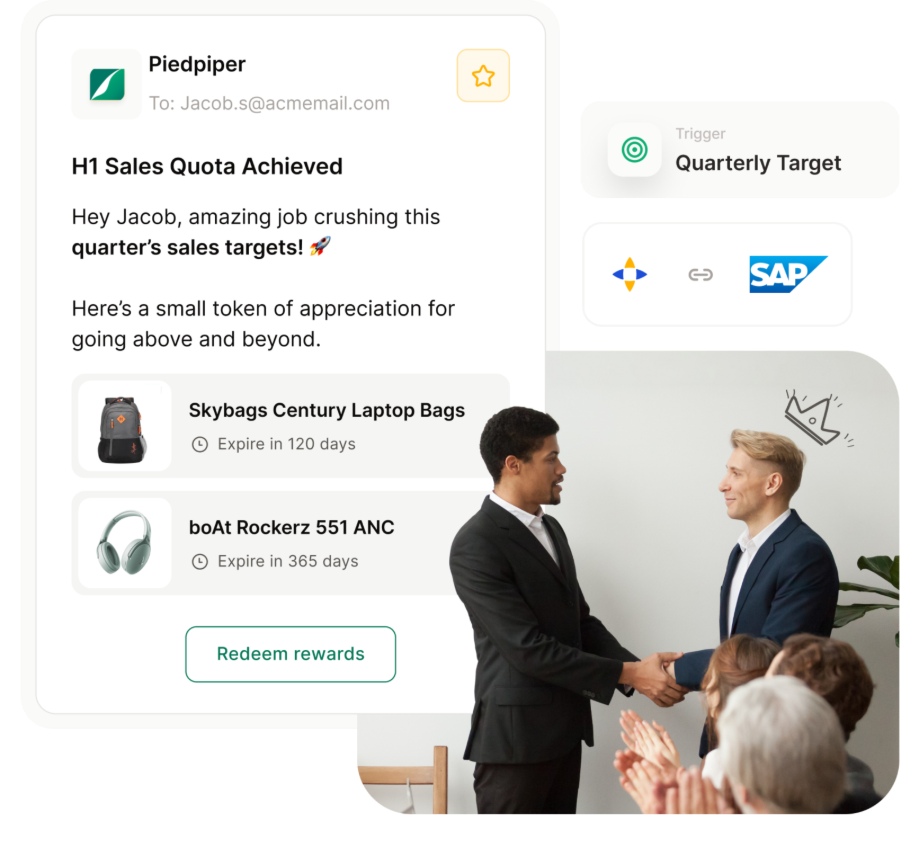
5. Reward the right behaviors
Recognize not only output but also effort, learning, and collaboration.
- Encourage knowledge-sharing or upskilling through custom challenges.
- Set up reward cycles for KPIs linked to sales, claims closure, or CSAT.
- Share leaderboard results to keep the energy high without adding pressure.
Simple changes across these areas lead to better retention, stronger teams, and a culture where recognition becomes a habit — not an event.
How AI helps insurance companies build a better culture
Manual engagement programs often stall. They rely on time-consuming processes, busy managers, and scattered data. AI fixes this. It brings consistency, speed, and accuracy to every part of the employee experience.
Here’s how:
1. Spot recognition gaps early
AI tracks who gets recognized and who doesn’t. If someone hasn’t received appreciation in a while, the platform nudges their manager to act.
- Prevents biased or uneven recognition
- Keeps every team member visible
- Promotes a more inclusive culture
2. Generate award messages instantly
Writing thoughtful appreciation messages takes time. AI creates personalized award notes based on achievements, saving effort and reducing delay.
- Ensures timely recognition
- Makes appreciation consistent across teams
3. Highlight skill trends across the workforce
By analyzing recognition messages, AI identifies key strengths across departments — like problem-solving, empathy, or ownership.
- Builds internal skill maps
- Supports learning and performance decisions
4. Predict attrition risk
AI scans patterns across recognition, feedback, and participation to spot early signs of disengagement.
- Flags employees who may be at risk of leaving
- Helps HR intervene with timely support or conversations
5. Summarize feedback for action
AI reads open-text feedback from surveys and delivers summaries with clear action points.
- Saves HR time
- Turns feedback into progress without delays
6. Protect workplace communication
AI screens posts and messages for inappropriate content, ensuring all interactions stay respectful and inclusive.
- Supports compliance and digital safety
- Reduces the risk of conflicts or complaints
AI doesn’t replace human connection. It makes space for it. With manual work out of the way, managers and HR teams can focus on people, not processes.
Results you can expect with Empuls
Better culture leads to better business outcomes. Insurance companies that invest in employee engagement see gains not just in retention, but also in productivity, service quality, and internal trust.
Here’s what empuls customers have reported:
- 87% of employees feel more valued and recognized
Recognition builds emotional connection. When people feel seen, they stay committed.
- 67% increase in overall employee eNPS
Happy teams create better experiences — for coworkers, customers, and policyholders.
- 62% improvement in communication and connectedness
A shared feed and regular updates reduce silos between departments, locations, and job roles.
- 30% reduction in employee turnover
Regular recognition and feedback help retain talent, especially in frontline and high-pressure roles.
- 1.5x revenue growth
Engaged employees lead to better service, faster execution, and stronger customer trust, all key growth drivers.
These outcomes aren’t limited to large insurers. Mid-size firms and growing agencies have seen the same results with the right structure and tools in place.
How to start improving culture in insurance teams
A better culture doesn’t need months of planning or a full HR overhaul. It begins with small actions — repeated often — across teams and touchpoints. Empuls makes it easy to set up and run these actions at scale.
1. Start with recognition
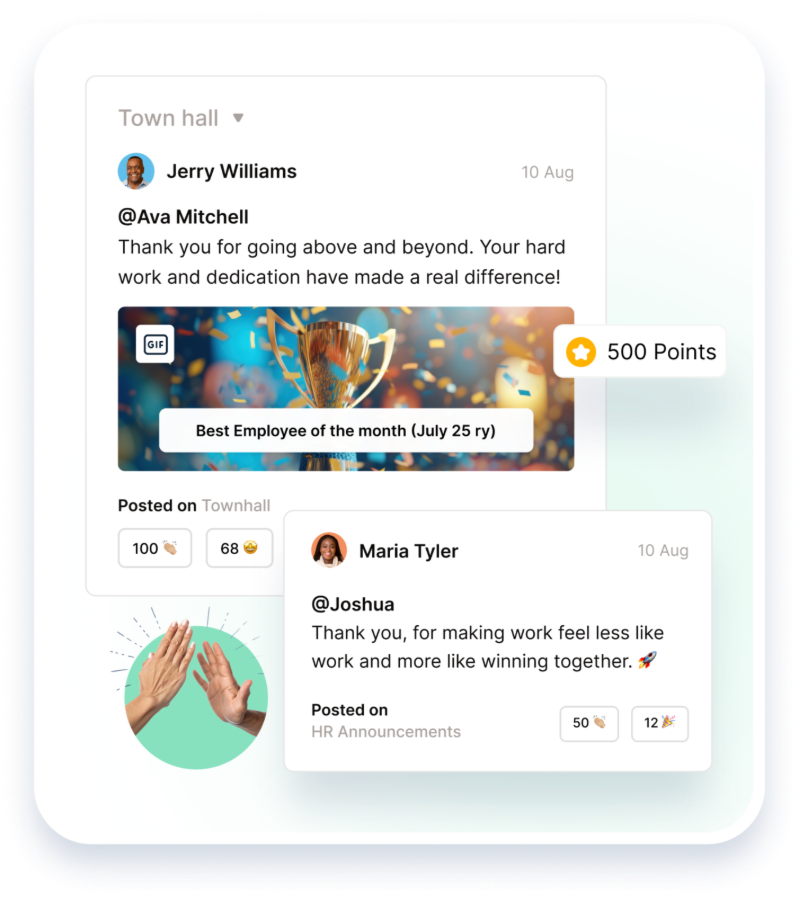
Peer-to-peer appreciation creates momentum. It empowers employees to recognize effort without waiting for a formal review or leadership approval. Managers can also use spot awards to highlight great work in real time.
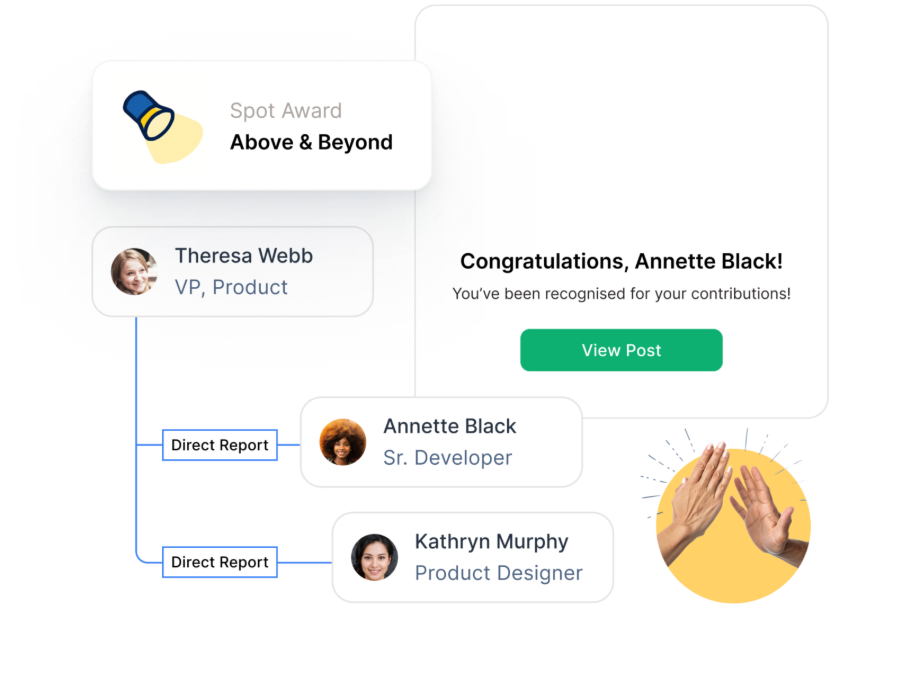
These recognitions, when tied to values like empathy or precision, reinforce the behaviors that matter in customer service, underwriting, and claims. Automating milestone rewards — for onboarding, anniversaries, and exits ensures every key moment gets acknowledged.
2. Share updates where people will see them
Visibility matters. Sharing company wins, customer stories, or policy updates on a common feed builds transparency and helps employees feel involved. You can take this further by using TV screens in lobbies or break rooms to display celebrations and announcements.
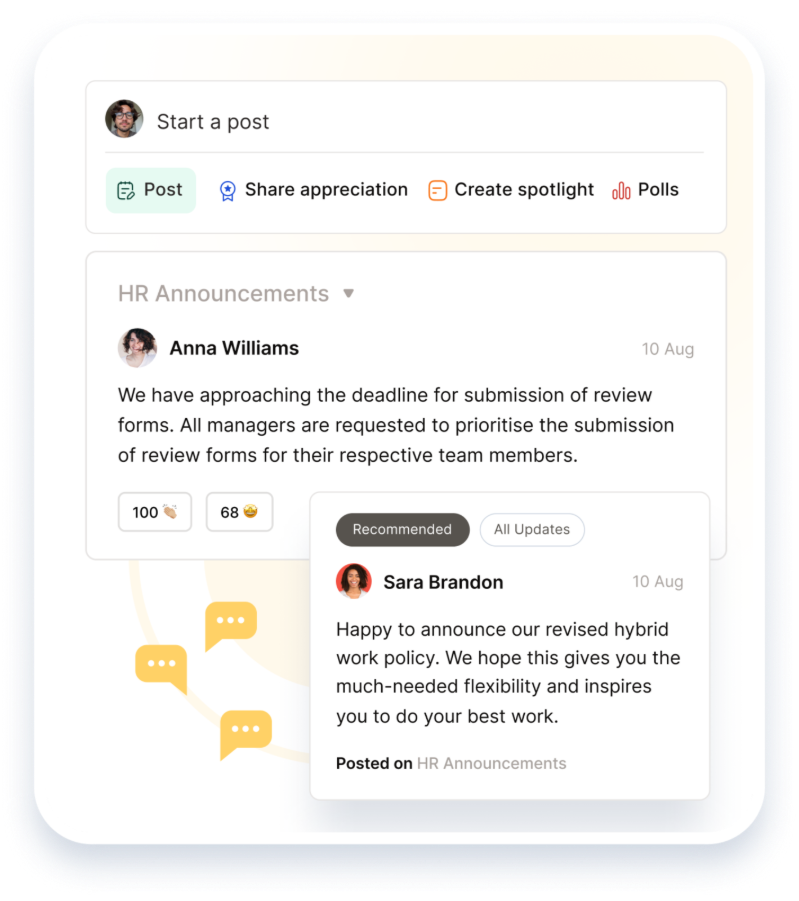
Even something as simple as pinning a message to the top of the company newsfeed keeps attention on what’s most relevant. With the right tools, updates don’t get buried in inboxes — they become part of daily conversation.
3. Make feedback part of the routine
Feedback works best when it’s simple and regular. Pulse surveys allow HR to gather honest input in under a minute. Anonymous responses encourage openness, and automated summaries help turn input into action quickly.
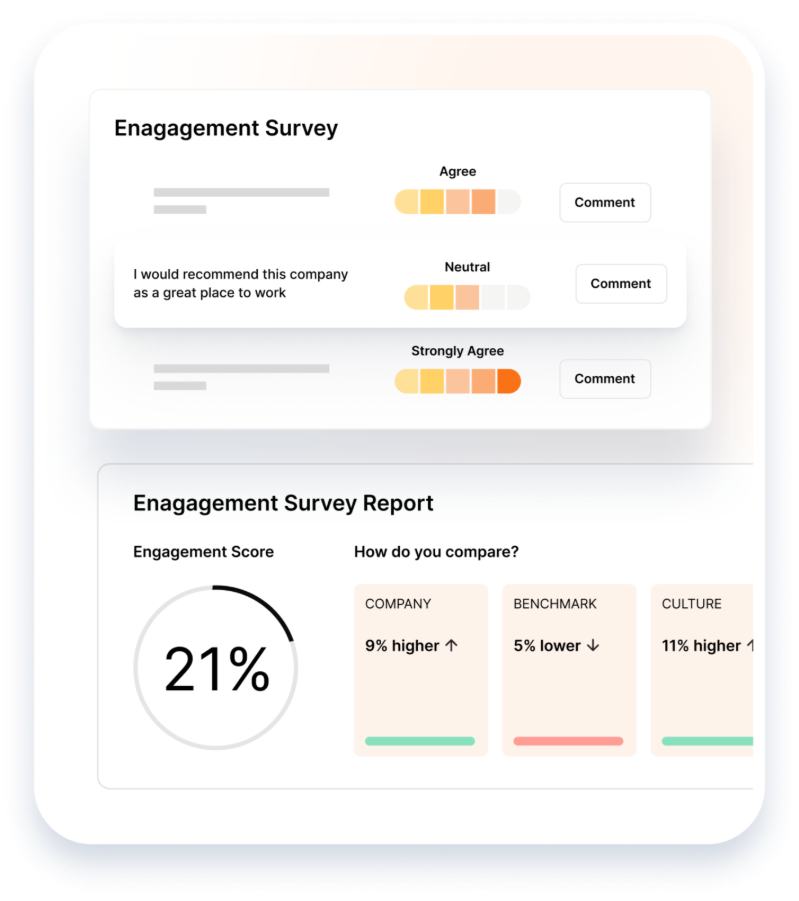
Sharing what you learn and what you’re doing about it builds trust across all levels. Employees don’t expect instant fixes, but they do notice when their voices lead to visible change.
4. Offer choice in rewards
Each employee values something different. Some prefer gift cards, others may want merchandise, experiences, or the ability to donate to causes they care about. A flexible reward catalog respects these preferences.
Empuls supports this with a global catalog that includes gift vouchers, travel, lifestyle perks, and more. With a pay-on-redemption model, companies can manage budgets while keeping the process smooth and efficient for everyone.
5. Welcome and celebrate consistently
First impressions and milestones leave lasting impact. Automated onboarding packs, welcome messages, and branded swag help new hires feel included from day one.

Birthdays, work anniversaries, and project completions are moments worth celebrating, and doing so doesn’t need to be time-consuming.
Empuls supports digital wishboards where teammates and leaders can share messages, photos, and videos. These small gestures strengthen relationships and reinforce a culture of appreciation.
Build a culture that works for your people
Insurance companies thrive when people feel invested — not just in tasks, but in the mission. Recognition, connection, and feedback turn everyday work into something meaningful. A strong culture doesn’t need a complete rebuild. It needs structure, consistency, and intent.
Empuls helps insurance teams build that structure. From real-time recognition to automated gifting, social sharing to skill insights, the platform removes friction and brings engagement into the flow of work. Managers spend less time coordinating. HR leaders get clear data. Employees feel valued.
Start where it matters most — with your people. Culture follows.