A Complete Guide to Building Cultural Alignment at Workplace
Walk into an aligned workplace and you feel it: faster decisions, smoother collaboration, meaningful work. See what cultural alignment is, why it matters, signs to watch, 7 practical steps, key frameworks, and how Xoxoday turns values into daily habits.
On this page
Walk into a truly aligned workplace and you'll feel it before anyone says a word. Conversations flow without friction. Decisions land faster. People show up not because they have to, but because they want to because the work means something. That's cultural alignment in action where it is felt in daily decisions, not just a poster on the wall.
Cultural alignment is the degree to which an organization's and its employees' values, beliefs, and behaviors are in sync. It results in a cohesive work environment where employees feel a sense of belonging and purpose, leading to better collaboration, engagement, and retention. Achieving this involves clear communication, consistent leadership, and hiring for cultural fit, while also embracing diversity to foster innovation.
In this blog, you will learn what cultural alignment is, why it matters, how to spot misalignment, the practical steps and frameworks to build it, Tool that powers it, and quick answers to common questions.
What is cultural alignment?
Cultural alignment happens when employees’ values, behaviors, and goals reflect the organization’s culture. You can feel it in a shared sense of purpose, see it in smoother collaboration, and spot it in consistent decision-making. When alignment is strong, work feels connected and meaningful.
But it doesn’t stay that way by default. Hybrid schedules, team silos, and rapid growth can nudge culture off course. The fix isn’t a one-time kick-off, it’s ongoing care: clear communication, simple rituals that reinforce “how we work here,” and the right tools to keep priorities visible and decisions repeatable. Do that, and you keep everyone rowing in the same direction without whacking each other with the oars.
Why does cultural alignment matter?
When people genuinely connect with your company’s culture, they don’t just show up — they buy in. Cultural alignment unlocks real engagement, deeper loyalty, and the kind of intrinsic motivation no pizza party can manufacture (though we fully endorse carb-powered morale).
And it’s not just feel-good. Aligned cultures deliver measurable outcomes, such as:
- Higher employee engagement: When the company values are known and the employees believe in them, they are more likely to be connected and motivated.
- Better performance: Alignment puts everyone on track so they will not be working on the same path, and productivity will be enhanced.
- Reduced turnover: When employees find their personal values congruent with the culture of the company, they will not turn over.
- Stronger brand reputation: Consistency on values translates to the customer, who trusts the company, and the partners, who also trust the company.
What are the signs your organization lacks cultural alignment
The first and most critical step in solving any culture challenge is recognizing where alignment has slipped. Even well-intentioned strategies fall flat when they’re rowing against the culture. Watch for these common signals:
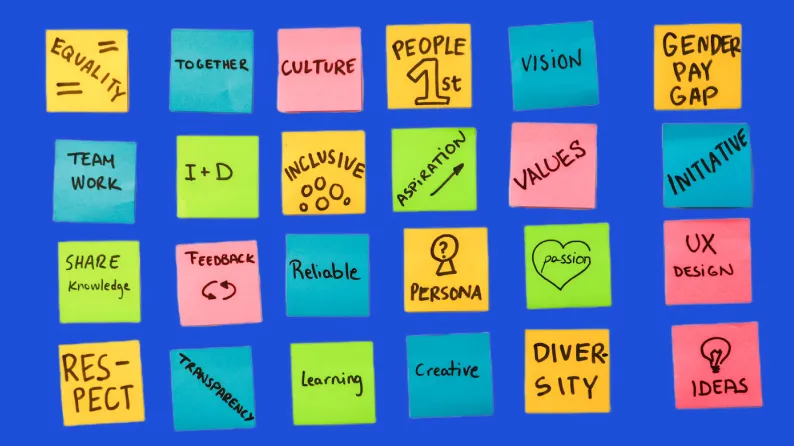
- Employees can’t name the values. If people struggle to articulate what the company stands for, that’s a major red flag. Values should be learned, lived, and used to guide everyday choices.
- Leaders say one thing, do another. Leadership sets the tone. When words and actions don’t match, trust erodes fast—and employees mirror that inconsistency, leading to confusion and disengagement.
- Turnover is high, retention is low. Cultural mismatch is a prime driver of exits. When values don’t resonate—or aren’t actually practiced—people look for workplaces that align better with their beliefs.
- Collaboration and engagement lag. Silos harden and teams avoid partnering when the culture doesn’t enable it. Low engagement often signals a gap between what employees value and what the organization reinforces.
- Customer complaints rise, reputation dips. Misalignment isn’t just internal. When employees don’t believe in the company’s values, service quality suffers—and so does the brand.
A practical fix is to centralize rituals. With Xoxoday, leaders can spotlight values, gather pulse feedback, and close the loop quickly.
How to drive better cultural alignment in the workplace: 7 Practical ways
Culture isn’t a one-time project; it’s a daily practice that keeps teams aligned and engaged, especially in hybrid and high-growth settings. When values guide everyday decisions and conversations, culture becomes real, repeatable, and resilient, built through clear expectations, consistent modelling, and steady reinforcement.
Use these proven moves to make culture something people live every day.
1) Define clear core values
Cultural alignment starts with values. Without them, expectations are unclear.
- Co-create values: Involve employees so they feel ownership.
- Make them actionable: Translate values into everyday decisions and behaviors (e.g., if you value collaboration, design more team-based work).
- Communicate clearly: Reinforce values in meetings, emails, training, and onboarding materials.
2) Embed culture in leadership behavior
Leaders are the model. If leaders do not live the values, alignment will stall.
- Lead by example: Reflect values in decisions, communication, and how you handle pressure.
- Reinforce through decisions: Tie promotions, recognition, and resources to behaviors that demonstrate core values.
Consistent leadership builds trust, sets expectations, and normalizes cultural standards across levels.
3) Align hiring and onboarding
Fit begins at the door.
- Recruit for cultural alignment: Assess candidates for values fit alongside skills.
- Onboard with purpose: Introduce history, mission, values, and expected behaviors so new hires know how work gets done here.
Strong alignment early reduces friction, speeds integration, and strengthens long-term performance.
4) Communicate transparently across teams
Open communication powers alignment.
- Encourage feedback: Create safety for questions, ideas, and concerns.
- Use multiple channels: Pair emails, intranet, meetings, and pulse surveys for consistent reinforcement.
- Promote collaboration: Enable cross-functional work around shared goals.
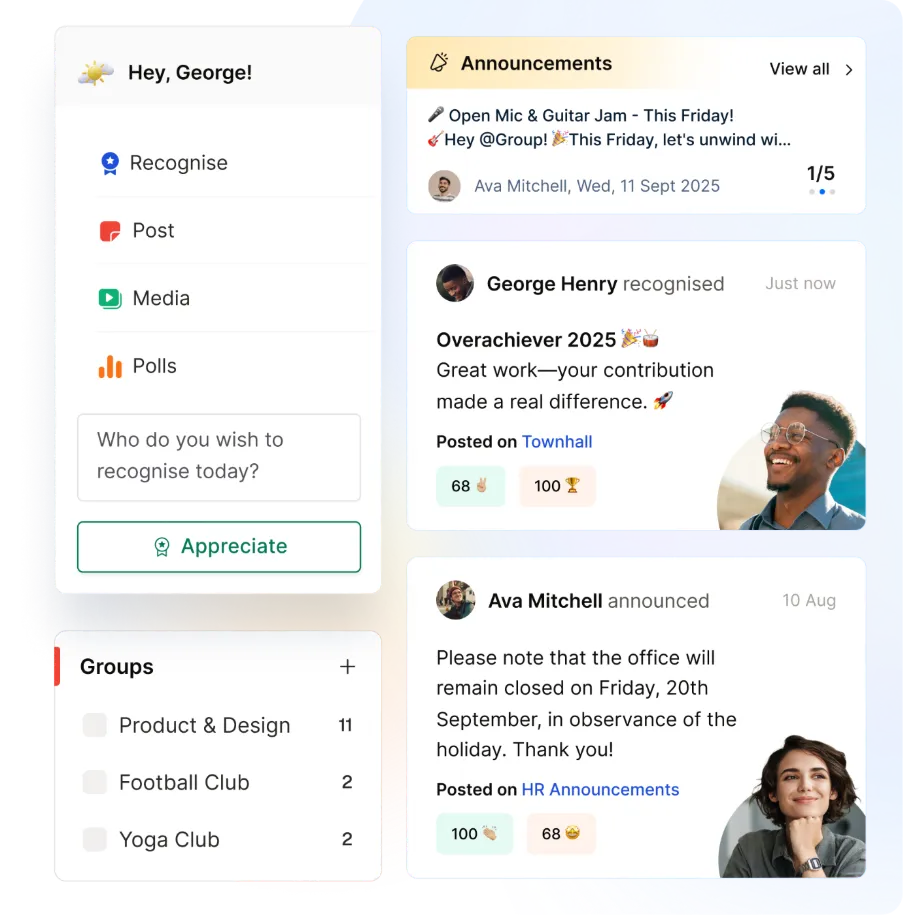
5) Recognize and reward aligned behaviors
What you reward repeats.
- Tangible rewards: Bonuses, awards, or perks for values-driven actions.
- Social recognition: Public shout-outs in meetings, newsletters, or internal platforms.
Consistent recognition motivates and clarifies what the organization values most.
6) Invest in development and growth
A learning culture sustains alignment.
- Training programs: Offer leadership and values-based training connected to company goals.
- Mentorship: Pair people with leaders who model desired behaviors.
- Career paths: Show progression routes that align with cultural expectations.
Development builds loyalty and spreads cultural norms across teams.
7) Measure, monitor, and adjust
Culture needs regular check-ins.
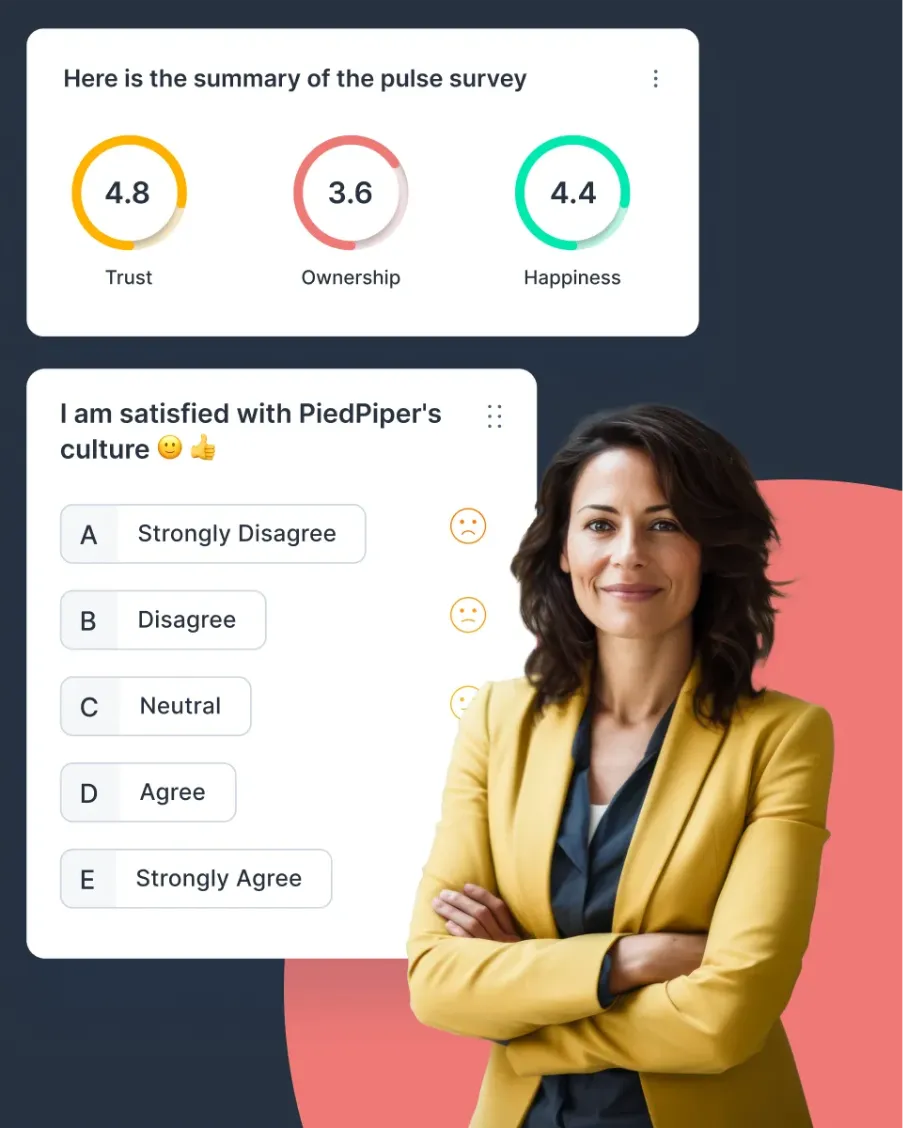
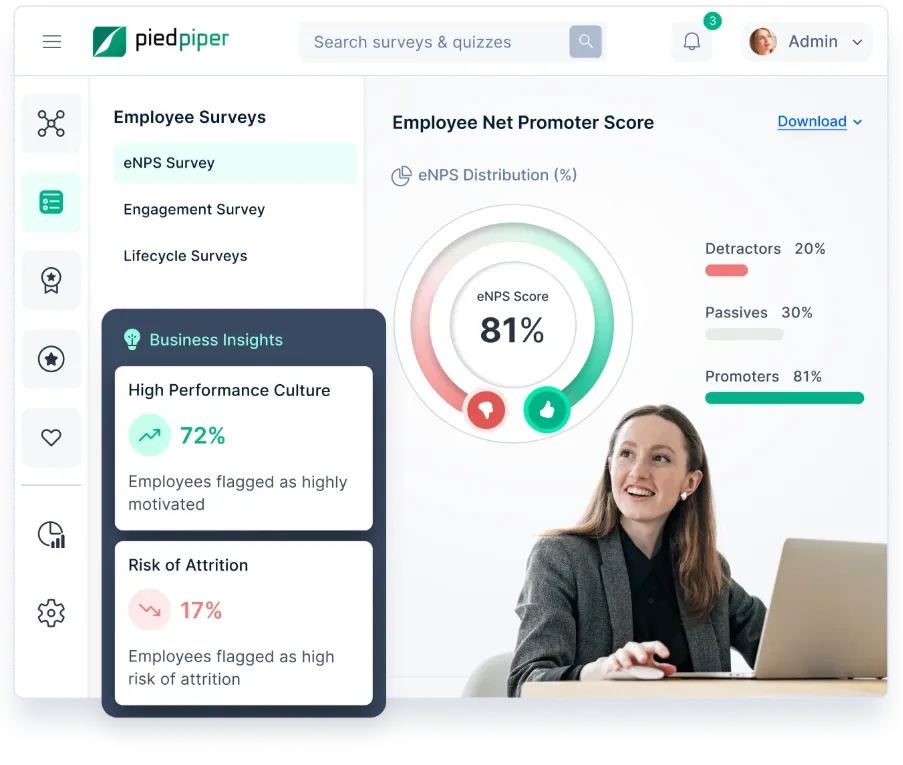
- Surveys and pulse checks: Track engagement, satisfaction, and cultural perception.
- Metrics and KPIs: Monitor turnover, absenteeism, productivity, and customer satisfaction as alignment indicators.
- Adjust strategies: Use data to refine processes, communication, and leadership practices.
Ongoing measurement keeps culture aligned with business objectives as the organization evolves.
Practical frameworks and tools to measure and scale cultural alignment
Sustaining cultural alignment takes deliberate strategy and the right systems so expectations feel consistent across the organization. These proven frameworks and tools help you assess where you are, identify gaps, and turn values into everyday behavior:
1. OCAI (Organizational Culture Assessment Instrument)
Uses the Competing Values Framework to compare your current culture with the desired one. Helps leaders pinpoint cultural gaps and prioritize improvements.
2. Denison Organizational Culture Survey
Evaluates four dimensions—Mission, Adaptability, Involvement, and Consistency—to reveal strengths and weaknesses. The insights guide practical steps that bring behaviors in line with stated values.
3. Schein’s Three Levels of Culture
Breaks culture into Artifacts (visible structures and processes), Espoused Values (stated principles and strategies), and Underlying Assumptions (deep-seated beliefs). Understanding these layers helps leaders align what people do with what the organization believes.
4. Digital tools to operationalize alignment
Utilize platforms like Xoxoday for culture enablement and employee engagement embed values into daily work. With automated onboarding, training nudges, recognition and rewards, pulse surveys, and feedback loops, Xoxoday helps create a consistent employee experience that reflects company values.
However, without frameworks to assess progress and tools to operationalize values, even strong strategies drift over time. Let's look at proven frameworks and tools that make these strategies measurable and scalable.
How to measure cultural alignment: A 5-step guide
Strong cultural alignment does not happen by accident. It starts with clear values, honest assessment, and intentional follow-through across the entire employee experience.
Use the steps below to turn culture from words on a page into habits people live every day.
Step 1: Define and communicate your core values
Begin with purpose and principles. Ask: What is our mission? Which behaviors guide daily decisions? How do people feel here, and how do we want them to feel?
- Make values specific and actionable. Replace generic labels with behavior statements. Instead of “teamwork,” try “we win together and back each other in good times and hard ones.”
- Embed values in routines. Work them into hiring questions, performance reviews, and meeting cadences.
- Spotlight stories. Open all-hands with recent examples of employees living the values.
Step 2: Assess current cultural alignment
If values are your north star, listening tools are the compass. Use surveys, focus groups, and one-on-ones to learn how culture shows up in real work.
Ask questions like:
- How well do you understand our values, and what do they look like in practice?
- How easy or difficult is it to live our values in your role?
- How consistently do leaders model the values in actions and decisions?
- Do recent decisions feel values-aligned? Why or why not?
- Do our values increase your connection to your team and the organization?
- How inclusive does our culture feel based on how values are practiced?
- Where are the gaps between stated values and actual operations?
- What one change would better align daily practices with our values?
This input reveals whether people know and agree with the values, and whether they see them being lived.
Step 3: Identify gaps and opportunities
Analyze results to find misalignments, especially differences between what leaders think and what employees experience. Look for disconnects across departments or levels.
- Prioritize wisely. Start with the most critical issues and the quick wins you can address early.
- Share the findings. Transparency builds trust.
- Have the CEO thank participants and share org-wide results.
- Ask managers to review feedback with their teams and draft action plans.
- Provide clear next steps, timelines, and a mix of town halls, videos, newsletters, and emails.
Step 4: Develop and implement alignment strategies
Data only matters if it drives action. Reset where culture is off track, and strengthen what already works.
- Leadership training and development. Equip leaders to connect with people and communicate effectively. (For example, Cisco trains leaders to bring out the best in their teams.)
- Onboarding and continuous learning. Build trust from day one and reinforce it with ongoing training and development.
- Recognition and rewards tied to values. Celebrate people who embody the culture. (At Capital One, “Spot Awards” recognize values-driven contributions with redeemable points.)
Weave values into every touchpoint, from interviews to how you celebrate wins and learn from failures.
Step 5: Continuously monitor and refine
Culture evolves as you grow. Track indicators like retention, promotion rates, and time to ramp for new hires.
- Compare survey gaps year over year and after action plans roll out.
- Keep the feedback loop active with pulse checks, exit interviews, and informal conversations.
- Adjust early when patterns emerge so issues do not compound.
With clear values, continuous listening, and consistent action, cultural alignment becomes a durable advantage that people can feel—and choose to stay for.
How Xoxoday helped Luminous turn recognition into better cultural alignment
Cultural alignment turns values into daily behavior, building trust, collaboration, and consistent decisions across plants, offices, and hybrid teams. Here is the impact Xoxoday created: it centralized recognition on a single value tagged platform, making appreciation timely, visible, and uniform so daily wins reinforce the culture Luminous wants to scale.
The challenge
Luminous Power Technologies had a strong tradition of appreciation, but recognition varied by department, happened only around events, and relied on paper certificates and tees—making culture feel inconsistent across locations.
Solution by Xoxoday
Here’s how Luminous solved engagement challenges with Xoxoday:
- Standardized, digital R&R: Moved 25 years of manual recognition onto a single platform with desktop and mobile access, so appreciation is timely and visible company-wide.
- ERP-friendly rollout: Integrated with Luminous’s existing systems for quick implementation and easy admin.
- Inclusive rewards catalog: Offered experiences, gift cards, and more to match different age groups and preferences—driving excitement from plants to offices.
- Values in action: Tagged recognition to Luminous’s five core values, turning day-to-day shout-outs into culture building blocks.
The impact
Recognition became frequent, uniform, and tied to values, boosting adoption even among blue-collar teams and making cultural alignment tangible in everyday moments. Leaders report a “huge improvement” as recognition now happens online, remotely, and with instant notifications to everyone involved.
Why it worked: Xoxoday made appreciation easy, integrated, and value-linked—so Luminous could scale recognition, reduce friction, and anchor the culture employees experience on the shop floor and in the field.
Make cultural alignment impactful with Xoxoday
Aligning culture is a big lift, but the right platform makes it simple—and a lot more engaging. Xoxoday helps you track, reinforce, and celebrate cultural alignment across the employee lifecycle. Here’s how:
- Values-based recognition and rewards
Peer-to-peer and manager shout-outs with value tags, automated milestones (joining, anniversaries, wins), points and budgets, and a global rewards catalog—so “what we value” shows up in daily behavior. - Always-on feedback
Pulse surveys, eNPS, and lifecycle check-ins with anonymous comments and action plans to spot alignment gaps early and close the loop fast. - Integrated communications and rituals
Company feed, announcements, and nudges inside Slack and Microsoft Teams; onboarding journeys and celebration posts keep mission and values front-and-center. - Built for global and hybrid teams
Multi-currency support, localized catalogs in 100+ countries, time-zone aware campaigns, and language options to scale culture consistently across regions. - Dashboards and insights
Real-time analytics and heatmaps by team, location, or function; value-adoption and recognition trends; exportable reports that highlight exactly where to act.
Make cultural alignment impactful with Xoxoday
Aligning culture is a big lift, but the right platform makes it simple—and a lot more engaging. Xoxoday helps you track, reinforce, and celebrate cultural alignment across the employee lifecycle. Here’s how:
- Values-based recognition and rewards
Peer-to-peer and manager shout-outs with value tags, automated milestones (joining, anniversaries, wins), points and budgets, and a global rewards catalog—so “what we value” shows up in daily behavior. - Always-on feedback
Pulse surveys, eNPS, and lifecycle check-ins with anonymous comments and action plans to spot alignment gaps early and close the loop fast. - Integrated communications and rituals
Company feed, announcements, and nudges inside Slack and Microsoft Teams; onboarding journeys and celebration posts keep mission and values front-and-center. - Built for global and hybrid teams
Multi-currency support, localized catalogs in 100+ countries, time-zone aware campaigns, and language options to scale culture consistently across regions. - Dashboards and insights
Real-time analytics and heatmaps by team, location, or function; value-adoption and recognition trends; exportable reports that highlight exactly where to act.
FAQ's
1. What are the 5 P's of corporate culture?
All 5 Ps of corporate culture are important factors that influence the culture of a certain organization:
1. Purpose: The purpose and the mission of the organization.
2. Principles: Firm convictions and ethical codes of conduct.
3. People: Employees, leaders, and their relationships.
4. Processes: Workflows, policies, and procedures that create an impact on behavior.
5. Practices: These are daily activities and actions that strengthen values and culture.
These 5 Ps are useful in enabling companies to develop a united and coordinated workspace
2. What are the 4 types of organizational culture?
The four common types of organizational culture are:
1. Clan Culture: It is about teamwork, collaboration, and employee engagement.
2. Adhocracy Culture: Promotes innovation, creativity, and risk-taking.
3. Market Culture: Results, competition, and goal achievement are priorities.
4. Hierarchy Culture: It focuses on rules, process, structure, and efficiency.
The type of culture enables leaders to use strategies that ensure they remain aligned and enhance employee engagement
3. How to align culture and strategy
Define values, translate into behaviors, link goals to values, model through leadership, hire and reward, measure regularly, adjust with feedback.
4. How to choose benefits package aligning with company culture
Start from values, survey employees, prioritize equitable, inclusive options, support wellness and growth, transparency, review data, iterate to maintain fit.
5. What is cultural alignment
When employee values, behaviors, and goals match the organization’s culture, enabling shared purpose, smooth collaboration, consistent decisions, and meaningful work.
6. Are business cultures necessarily aligned to national cultures
Not necessarily; companies blend practices with local norms and values.