On this page
What makes some workplace platforms addictive? Well, it is due to gamification. It turns routine actions into rewarding experiences.
And think about what will happen when you add AI to it?
AI makes the feedback more strategic, intelligent, and action-oriented. The system learns from your behaviour, adapts the challenge, and predicts what keeps you engaged. This is how AI is revolutionizing the way people learn, perform, and connect within gamified systems.
In this article, we’ll explore how gamification works, why real-time feedback matters, and the powerful role AI plays in shaping the next generation of engagement and productivity platforms.
Understanding the Core Principles of Gamification
Gamification does not mean winning only badges or points. It also includes psychology.
It uses motivation, feedback, and progress to turn effort into satisfaction. Here are the core principles:
- Clear goals and progress visibility: People love knowing where they stand. Visual dashboards showing progress toward a goal tap into that natural drive.
- Balanced challenge and skill: Too easy, and people get bored; too hard, they give up. Good gamification keeps users in that sweet spot of “flow.”
- Instant reinforcement: When users take action and get a quick response, the brain releases dopamine. This is what keeps them coming back.
- Social connection: Humans thrive on recognition. Team missions, leaderboards, and peer shout-outs make engagement communal, not isolated.
- Meaningful rewards: Real or virtual, rewards work only when they feel earned and linked to a meaningful purpose.
In short, gamification works because it taps into human motivation. But it’s the feedback loop that counts. The immediate “you did this, now do that” turns it into a growth engine.
Must-Have Elements in Gamification
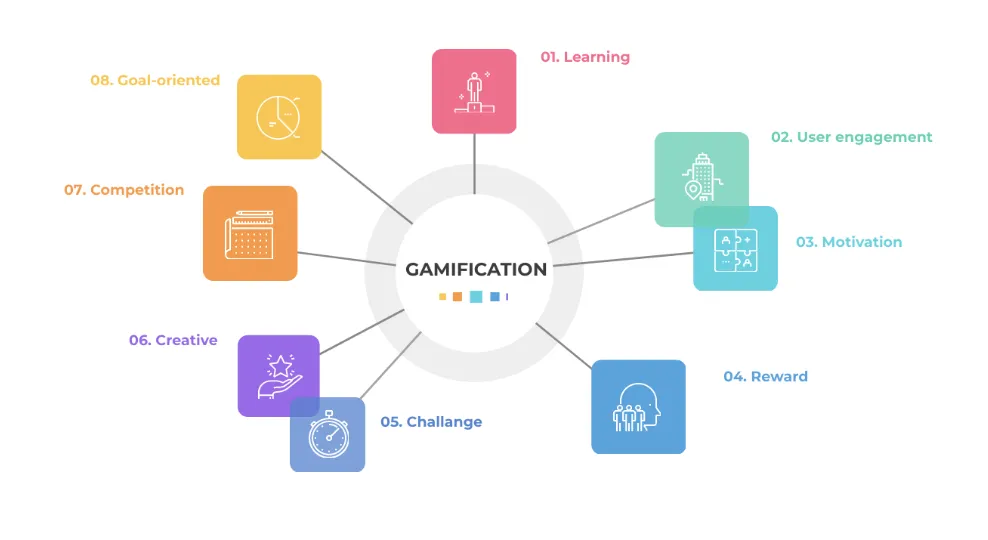
Every effective gamified system shares certain building blocks. Here’s what you’ll find under the hood:
- Points and scoring systems: The simplest way to track progress. Every completed task earns measurable value.
- Badges and achievements: These visual milestones give people a sense of pride. Think “Certified Pro” or “Top Collaborator.”
- Levels and progression paths: People need direction. Levels guide users toward mastery.
- Leaderboards and team challenges: Friendly competition builds community energy.
- Instant feedback loops: They are the heartbeat of engagement. Every task completed triggers a nudge, visual cue, or progress update. And that’s the essence of real-time feedback in gamification systems.
- Personalized challenges: Adaptive design ensures the game evolves with the player.
- Narratives and themes: Storylines add meaning. A mission feels more purposeful than a task.
These elements together make gamification fun and functional. When they’re connected by live insights, users play and improve.
What Makes Workplace Gamification Effective
In the workplace, gamification transforms engagement into measurable outcomes.
Here’s what separates impactful programs from superficial ones:
- Alignment with goals: Every point or badge should link to real KPIs, response time, sales, collaboration, and learning.
- Transparency: When employees can see their performance in real time, they don’t wait for quarterly reviews to improve.
- Micro-rewards: Small and frequent wins drive continuous motivation.
- Social recognition: Public achievements build morale faster than private praises.
- Continuous evolution: Gamified systems that stay fresh with rotating challenges or seasonal missions sustain interest longer.
According to HRMorning, companies that implement gamified training see a 48% boost in employee engagement and significant productivity gains.
Gamification works best when it becomes a part of daily work, not a side activity.
Why Real-Time Feedback in Gamification Matters
Let’s explore why real-time feedback in gamification is the bridge between motivation and performance.
- Immediate course correction: Real-time insights let users fix mistakes before habits form.
- Motivation through progress: Every instant update fuels momentum, and users see their growth, not just results.
- Higher retention: Feedback keeps users from drifting away by showing continuous progress.
- Smarter learning: When feedback is instant, users reflect faster and retain information longer.
- Data-driven decisions: Real-time data allows both users and leaders to make quick and informed choices.
A study by Upskillist found that learners receiving immediate feedback improved accuracy and retention significantly faster than those without it.
That’s the true power of a live response. It keeps motivation alive and performance measurable
How AI Amplifies Gamification With Real-Time Feedback
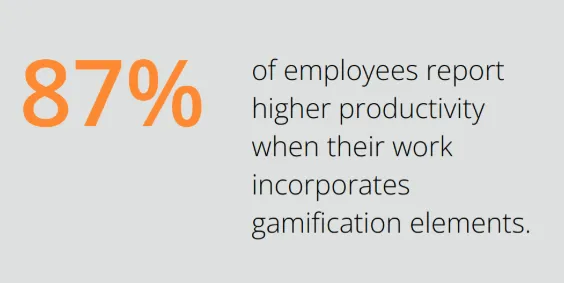
Now comes the transformation, where gamification meets artificial intelligence.
Here are six powerful ways AI takes real-time feedback in gamification to the next level:
Personalized learning and adaptive challenges
AI analyzes user data to predict difficulty, recommend the next challenge, or even adjust missions on the fly. Every player gets a unique journey.
Instant micro-feedback through automation
With AI-driven analytics, the system responds in milliseconds. For instance, sales reps might see “Your response time improved by 12% this week, great job!” without manager intervention.
Predictive engagement
AI can spot when a user is losing motivation and trigger a timely nudge, challenge, or badge. This prevents disengagement before it starts.
Smart segmentation and personalization
Users aren’t one-size-fits-all. AI clusters users by goals and learning styles, tailoring the tone, timing, and type of feedback for each.
Voice-enabled and agent-based coaching
Some advanced platforms even use AI voice prompts or AI agents to deliver feedback conversationally. For example, “Nice progress on your project. Here’s your next mission.” This makes interaction human-like and engaging.
Data-to-business linkage
AI connects gamified metrics like badges or KPIs like conversion rate, and proves business impact.
Platforms like Empuls and Giift are leading this movement. They are offering AI-powered gamification platforms that combine adaptive feedback, analytics, and recognition in real time.
The Future of AI and Real-Time Gamification
The future of gamification with real-time feedback includes points, rewards, and intelligent interaction. As AI continues to evolve, it’s reshaping how we experience engagement, motivation, and learning in real time. Here’s where this transformation is headed:
1. AR and VR Integration
Immersive Training: Augmented and virtual reality are creating immersive training experiences for employees and learners.
When this technology is fused with AI, it tracks movements, responses, and learning curves. This offers real-time corrections and insights to users.
2. Blockchain Rewards
Transparent Recognition: Using blockchain, users can ensure that every badge, milestone, or token that is earned through gamification is verifiable. It even checks the security.
This builds trust and makes achievements feel more meaningful, especially in competitive workplace environments.
3. Emotion Recognition
Empathy Through Data: AI can analyze facial expressions and tone to detect user emotions.
Gamified systems can use this emotional data to adjust the difficulty levels, provide encouragement, or offer breaks when users show signs of fatigue. This ensures that users relax and rejuvenate when needed.
4. Hyper-Personalization
Custom Learning Journeys: Future AI-powered gamification platforms will personalize all the elements of the user experience.
AI will learn what motivates each person and how they respond to specific triggers. This will create engagement loops that feel personalized to users.
5. AI Voice: The Next Big Leap
Conversational Feedback: One of the most transformative developments in gamification is the rise of AI voice.
Consider a wellness app with an AI voice coach that cheers you on during a fitness challenge. Another example is a learning platform that adapts its tone and pace based on your responses.
This turns static visual feedback into a dynamic two-way conversation, building connection and motivation.
AI voice is a technology that helps employees with visual or learning disabilities.
Instead of reading dashboards or notifications, they can receive real-time feedback through voice prompts. This makes gamified systems more human, empathetic, and inclusive.
6. The Road Ahead
Emotionally Intelligent AI: Future systems will interpret mood, energy, and motivation to adjust tasks and rewards accordingly.
Adaptive Workplaces: Companies that use gamification platforms are already integrating real-time analytics with gamified engagement tools. This increases morale and productivity.
The next generation of AI gamification feedback will mix automation with emotional intelligence. This will make every interaction smarter, faster, and more meaningful.
The future of AI-driven real-time gamification will sound, look, and feel more human. With AI voice, emotion-aware responses, and hyper-personalized learning, organizations will be able to build experiences that listen, adapt, and evolve with every user.
Industries Transforming Through AI-Powered Gamification
Education/eLearning
Research shows that gamified learning experiences can yield an increase in test scores among students when compared to traditional methods.
A systematic review of 90 interventions found that gamification positively impacts self-efficacy, participation, motivation, and engagement in primary and secondary education.
Key takeaway: When educational content is gamified and supported by AI-driven feedback loops, learners engage more, progress faster, and stick around longer.
Healthcare & Medical Training
In U.S.-based health-training programs, gamified simulations backed by AI feedback have shown measurable improvements in accuracy and speed of decision-making (e.g., radiology training).
Key takeaway: In high-stakes domains like medical training, AI-enabled immediate feedback in a gamified environment helps learners practise, correct, and refine skills under simulations.
Technology/Sales & SaaS Training
A U.S. enterprise case study revealed a 15% increase in sales productivity and a 20 % reduction in employee attrition after rolling out a gamified training/engagement program with live feedback.
83% of employees who underwent gamified training reported feeling motivated, compared to only 61 % in non-gamified training.
Key takeaway: Sales and tech teams benefit when gamification is aligned with performance metrics and immediate feedback is built into the system.
Workplace Engagement & HR
Data indicates that companies with high employee engagement show 21 % higher productivity and 35 % lower turnover. Employee engagement can be improved with gamification. A report found that when gamification is integrated into workplace systems, 69 % of employees are more likely to stay for more than 3 years.Key takeaway: Gamification with live feedback increases engagement, and it can reduce turnover, align employee behaviour with goals, and build a healthy culture.
Retail & Customer-Loyalty/Finance
In retail training, you can introduce gamified elements like leaderboards and missions. This boosts speed and accuracy in service.
Key takeaway: Outside purely internal training, gamification extends to customer-facing systems and loyalty programs, and real-time feedback makes the difference between novelty and sustained behaviour change.
How AI Gamification Drives Employee Motivation and Productivity
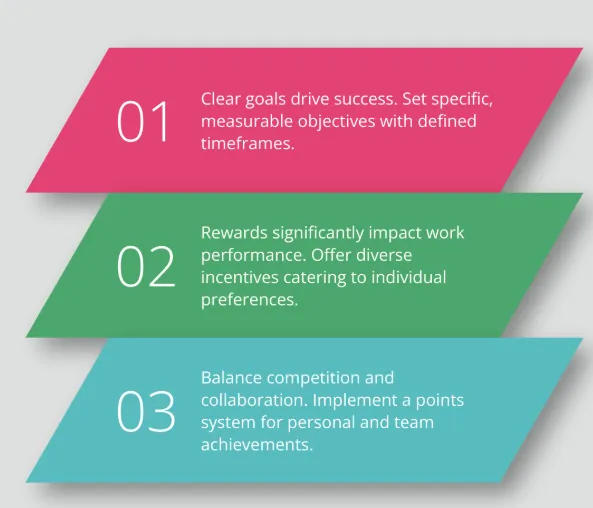
If you’re an organization looking to increase motivation and productivity, here’s how AI-based gamification helps:
- Keeps employees in the “zone” with visible progress: Live dashboards let employees see how they’re doing in real time and eliminate ambiguity: “Am I on track?” becomes “I’m 85% to the next badge, 3 tasks left.”
- Delivers tailored feedback and development: Instead of generic annual reviews, employees receive micro-coaching via the platform: “Your average response time this week is 22 minutes, aim for <20 next week to move up a level.”
- Fuels recognition and achievement culture: When workers unlock badges, see their name on leaderboards, and earn status, that social acknowledgement drives motivation.
- Aligns personal progress with business goals: Employees understand how their game progress maps to business outcomes (e.g., sales made, customer satisfaction improved), so their work feels meaningful.
- Promotes continuous improvement rather than just status quo: Because feedback is immediate and missions are adjusted, employees are in a growth loop, not just ticking boxes.
- Increases productivity by reducing friction and creating fun: When tasks feel like purposeful missions and feedback is real-time, people engage more, work smarter, and stay committed longer.
AI-powered recognition systems turn work into a dynamic experience, where motivation, feedback, and progress are tightly integrated rather than trapped in annual reviews. This drives productivity, engagement, and ultimately business impact.
Turn Real-Time Feedback Into Lasting Motivation
The journey of AI-powered gamification is redefining how people experience work. It goes beyond badges and leaderboards to creating meaningful moments that drive lasting motivation. Through gamification and real-time feedback, organizations can build continuous learning cultures where employees feel recognized, guided, and connected.
AI adds depth to this process. It personalizes every challenge, measures both effort and outcomes, and delivers adaptive insights that help teams improve every day. From emotional recognition to intelligent rewards, AI turns gamification into a living support system that grows with your people.
The payoffs are increased engagement, improved retention, and nurtured innovation. The future belongs to companies that understand that motivation is not managed; it’s inspired.
So, here’s the question: Is your workplace ready to make motivation personal?