On this page
In restaurants, hospitality, and retail, repeat customers drive growth. Loyalty programs are meant to reward these customers and keep them engaged.
In reality, many run on a patchwork of systems — one for sign-ups, another for point tracking, another for redemptions. Teams spend more time moving data than connecting with customers, while members face slow, clunky processes to join, renew, or redeem.
Loyalife by Xoxoday fixes this by uniting the entire loyalty journey into one platform. From onboarding to rewards, renewals to analytics, it creates a connected ecosystem that delivers both speed and consistency.
What does a fragmented loyalty ecosystem look like?
A fragmented loyalty setup creates complexity at every step. Instead of one connected system, brands juggle multiple tools, each handling a different stage of the journey.
Typical signs of fragmentation:
- Separate systems for registration, data upload, validation, and reporting.
- Manual data transfers between file formats like DBF and CSV.
- No unified view of customer activity or behavior.
- Renewal flows stretched across emails, QR codes, and forms with no real-time updates.
- Heavy team involvement in tasks that could be automated.
On the customer side, things aren’t any easier. Enrolling or renewing often takes too many steps. Customers have to remember emails, scan codes, submit forms, and then wait for a reply without real-time updates.
The impact? More drop-offs, less engagement, and a loyalty program that stays busy but doesn’t grow.
The real problems behind loyalty failures
Most loyalty programs struggle not because the concept is flawed, but because of how they are executed. Businesses attempt to piece together loyalty journeys using multiple disconnected tools, resulting in high operational effort and poor customer satisfaction.
Let’s break down the key issues that hold these programs back:
1. Multiple systems for a single journey
Each stage of the loyalty program enrollment, data validation, rewards, renewal, and reporting requires a different tool. There’s a system for registering new users, a separate system for validating cards, a separate tool for uploading transaction data, and a separate system for generating reports.
This fragmented setup increases the chances of errors, delays, and mismatches between systems. Loyalty teams spend time syncing data instead of focusing on improving customer experience.
2. Manual and repetitive processes
Even basic actions like updating member information or checking loyalty points involve manual steps. Teams often have to:
- Download data in one format (e.g., .dbf),
- Convert it to another format (e.g., .csv),
- Upload it into the next system,
- And repeat the process for every new update.
This eats into time and resources, leaving room for data mismatches and delays in member communication.
3. Disjointed customer experience
The user experience suffers when loyalty programs are not connected. For example, in a typical renewal flow:
- Customers receive a manual email asking them to renew.
- They click a renewal button, scan a QR code, fill out a form, and submit payment proof.
- After completing everything, they are told to check their renewal status 24 hours later.
This sequence is long, confusing, and discouraging. There is no instant confirmation or visibility into the process.
4. No single source of truth
Without a centralized platform, different teams work with other data. The marketing team runs campaigns based on old information. The customer support team cannot check real-time redemption or tier status. This disconnect creates gaps across customer journeys and weakens trust in the loyalty program.
5. No personalization or real-time control
Most loyalty systems fail to adapt in real-time. If a customer visits during off-peak hours, there’s no system to reward them automatically. If a member hits a spending milestone, the upgrade to a higher tier doesn’t happen immediately. This delay makes the program feel rigid and unresponsive.
Each of these problems contributes to a loyalty program that feels clunky to customers and exhausting to manage for internal teams. But there’s a better way to fix it—and that’s where Loyalife comes in.
How Loyalife transforms every stage of the fragmented loyalty lifecycle
Loyalty is more than just earning and burning points. It includes how customers join the program, how rewards are calculated, how redemptions are handled, and how customers feel recognized and valued over time. Loyalife supports each of these moments with clear processes, automation, and personalization.
1. Enrollment and member profiles
Customers can sign up in-store or online through a fast, OTP-based process. Once verified, they receive an instant virtual loyalty card linked to their mobile number. The system captures essential details like preferences, visit frequency, and spending patterns, and assigns tiers automatically based on program rules.
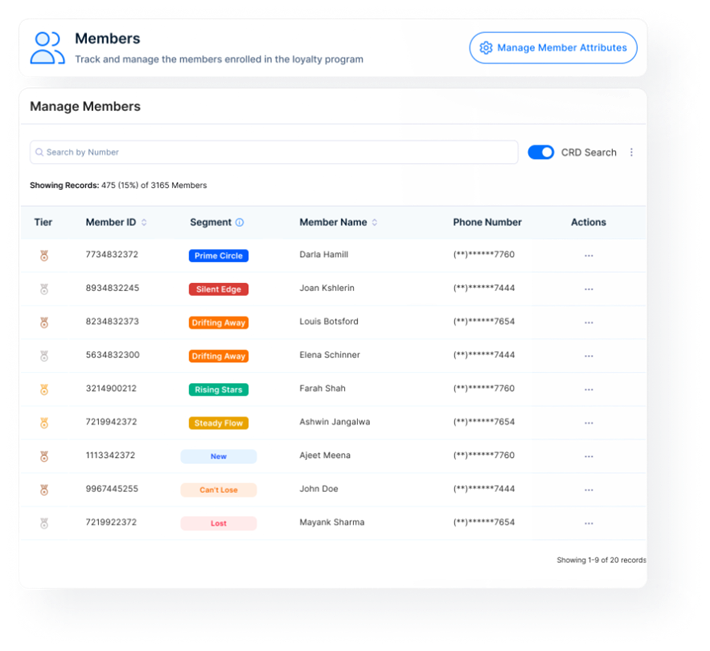
Benefits: Faster onboarding, a single central database for all members, improved personalization, and secure tracking through unique IDs.
How it fixes the fragmentation problem: In a fragmented setup, enrollment data sits in multiple systems, creating duplicates and gaps. Loyalife centralizes this process, syncing member details across all channels in real time.
2. Earning points: Accrual process and rule engine
Loyalife’s rule engine allows brands to create flexible earning structures — from awarding points on dine-in and delivery orders to bonus points for off-peak visits or special events. Tier multipliers are applied automatically, ensuring higher-value members earn more. Points are credited in real time without manual intervention.
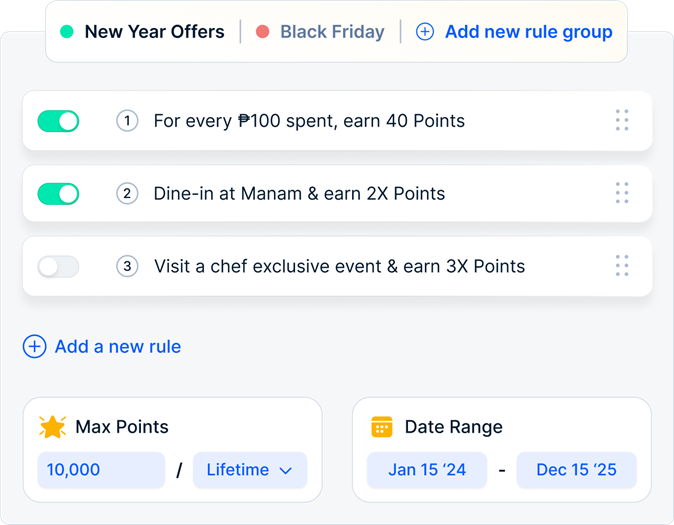
Benefits: Flexible reward structures, instant point updates, prevention of earning misuse, and better engagement through targeted campaigns.
How it fixes the fragmentation problem: Traditionally, point accrual is handled by separate systems or offline processes, leading to inconsistencies. Loyalife automates and unifies this, ensuring accurate, immediate crediting across outlets and brands.
3. Redeeming points: A flexible and secure burn process
Members can redeem points for discounts, VIP event access, gift cards, or items from a curated marketplace. The redemption catalog can be tier-based, offering higher perks to premium members. Codes are generated instantly and validated at POS for immediate redemption, with assisted redemption available through support teams.
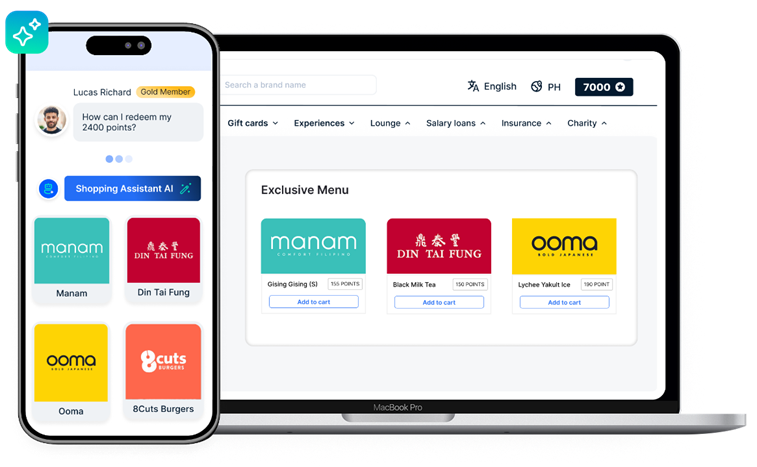
Benefits: Smooth multi-brand redemption, consistent experience across channels, fraud detection, and improved member satisfaction.
How it fixes the fragmentation problem: Without a unified redemption engine, teams use separate processes for in-store and online redemptions, creating delays and errors. Loyalife connects all redemption channels into one system, enabling real-time validation and fraud checks.
4. Tier progression that builds loyalty
Tiers are updated automatically based on lifetime or rolling spend. Higher tiers unlock perks like priority reservations, exclusive tastings, and personalized dining rewards. This gamified progression motivates members to increase their spend to access better benefits.
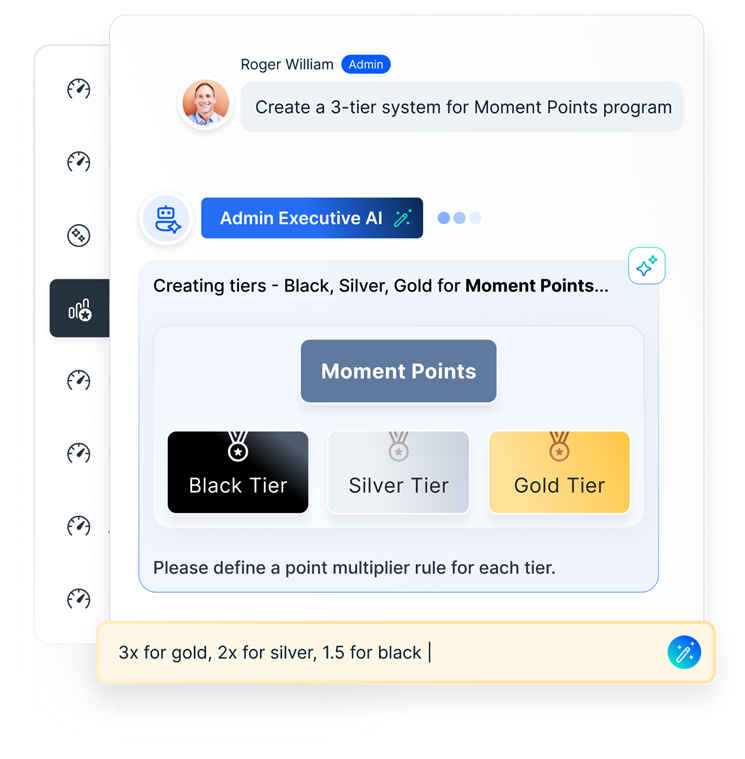
Benefits: Encourages higher spending, adds exclusivity, drives retention, and keeps members actively engaged.
How it fixes the fragmentation problem: In fragmented programs, tier upgrades are often manual and delayed, causing frustration. Loyalife updates tiers instantly across channels, ensuring benefits are applied the moment a member qualifies.
5. Renewals and referrals that drive organic growth
Loyalife automates the renewal process with timely reminders and added perks like bonus credits or extended point validity for on-time renewals. Referral tracking is built into the platform, with rewards for both the referrer and the new member upon their first transaction.
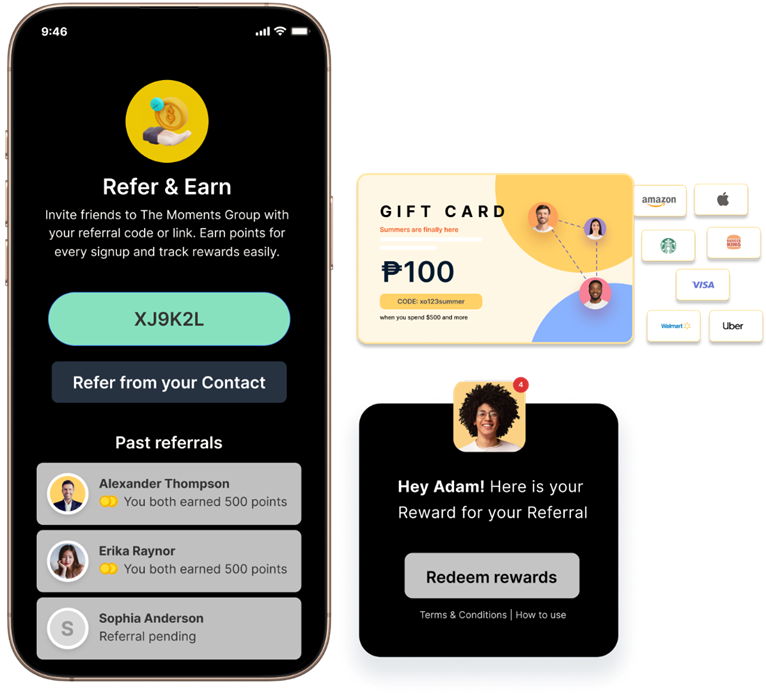
Benefits: Generates organic growth, increases loyalty duration, and strengthens program advocacy.
How it fixes the fragmentation problem: Renewal and referral programs often sit outside the main loyalty platform, requiring separate tracking. Loyalife brings them into one system, automating tracking, reward distribution, and reminders in real time.
6. Deeper member engagement beyond transactions
The platform supports exclusive, experience-driven engagement such as chef’s table dinners, private dining, and workshops. Campaigns can be personalized based on member preferences, visit patterns, and spending behavior.
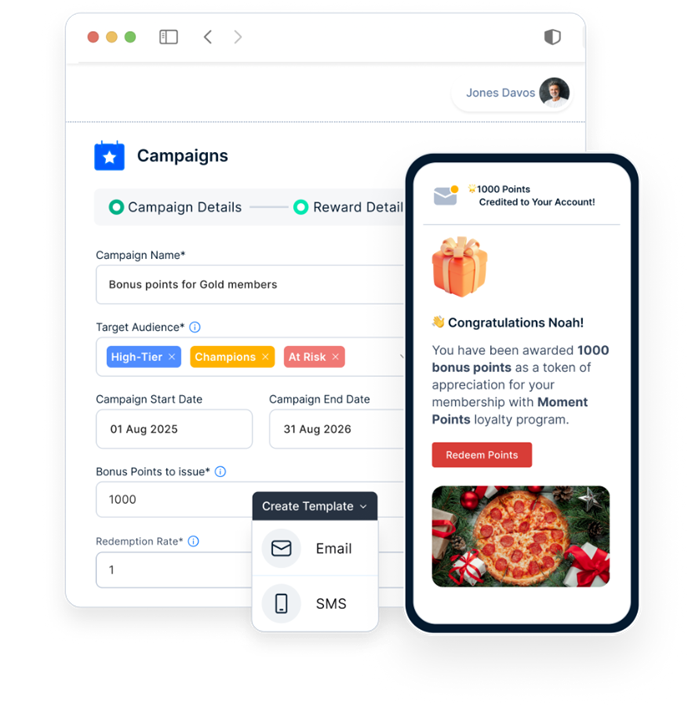
Benefits: Builds emotional connections, drives repeat visits, and increases brand affinity through curated experiences.
How it fixes the fragmentation problem: In disconnected systems, engagement activities are run separately from loyalty data, limiting personalization. Loyalife links campaign targets directly to member profiles for more relevant, timely offers.
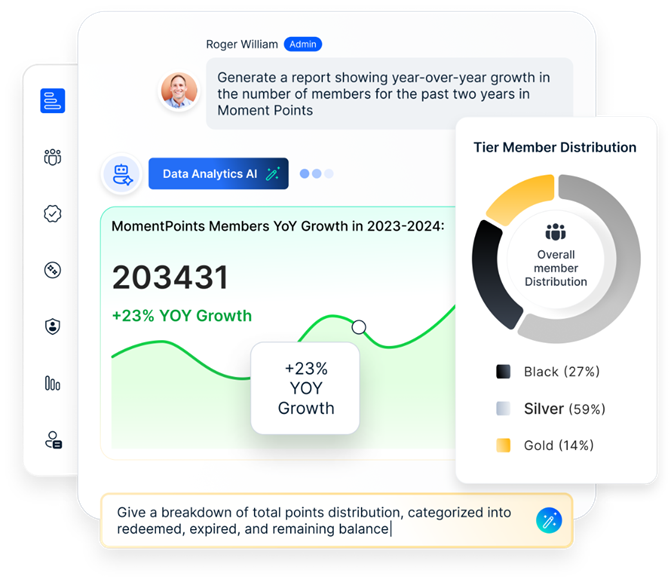
7. Reports, analytics, and security that drive confidence
A unified dashboard tracks transactions, point liabilities, redemption patterns, and campaign performance. Automated expiry alerts encourage timely redemptions, while insights from reports guide program optimization.
Benefits: Real-time visibility, accurate forecasting, and better decision-making with consolidated data.
How it fixes the fragmentation problem: When reports come from different systems, it’s hard to get an accurate picture. Loyalife consolidates all reporting into one source, eliminating data mismatches and giving teams a complete view.
8. Enterprise-grade controls for security and fraud prevention
Loyalife provides enterprise-grade security with audit logs, role-based access, anomaly detection, and maker-checker approvals for sensitive changes. Every action is timestamped and attributed to the responsible admin.
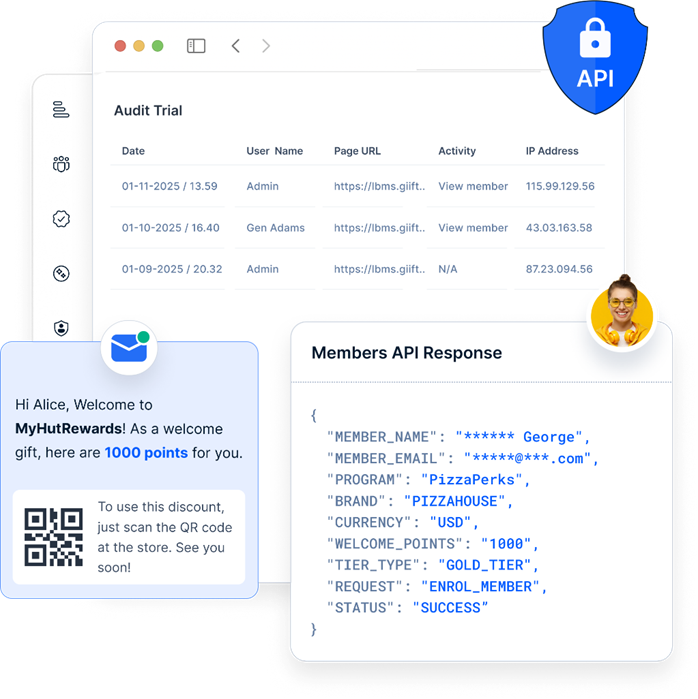
Benefits: Protects against fraud, ensures compliance, and maintains program integrity.
How it fixes the fragmentation problem: Without centralized control, it’s difficult to track admin actions across multiple systems. Loyalife creates one audit trail for all program activities, standardizing approvals and access policies.
Case Study: A restaurant group’s journey from fragmented loyalty to seamless engagement
A well-known multi-brand restaurant group in Southeast Asia, operating casual and premium dining formats across multiple locations, wanted to improve customer retention through a loyalty program. While they had an existing setup, it relied on separate tools for different functions and required heavy manual effort from their loyalty teams.
The challenge
The company was dealing with a loyalty program that looked connected from the outside, but internally, it was deeply fragmented.
Key challenges included:
- Multiple disconnected systems for enrollment, renewal, redemptions, and reporting
- Manual data transfers between formats like DBF and CSV
- Delayed tier upgrades and redemption validations
- High friction in member onboarding and renewals
- No centralized view of member behavior or program performance
These issues created inefficiencies across teams and resulted in a poor member experience.
The solution
The group adopted Loyalife, Xoxoday’s end-to-end loyalty management system, to bring every part of their loyalty lifecycle into one connected platform.
Loyalife enabled:
- Digital and in-store enrollment through a single system
- Automated tier progression based on real-time spend
- Custom earn and burn rules across different brands and dining formats
- Seamless referral tracking and renewal flows
- Integrated reporting, campaign analytics, and audit trails
- API integrations with POS, CRM, and communication tools
The results
Within months of implementation, the brand saw tangible improvements in both customer experience and internal efficiency.
Key outcomes included:
- 85% reduction in manual data handling across teams
- Real-time tier updates and redemption tracking across outlets
- Faster member onboarding through OTP-based sign-ups
- Increased member engagement through event invites and targeted campaigns
- Improved decision-making with unified dashboards and expiry forecasts
What once took days of coordination now happens instantly. Loyalife helped the brand turn loyalty from an operational headache into a strategic asset.
Conclusion: A loyalty system that finally makes sense
Many loyalty programs fail not because of poor design, but because they are scattered across disconnected tools and manual processes. Loyalife solves this by bringing everything—enrollment, points, tiers, referrals, redemptions, and reporting—into one intelligent, unified platform.
Built by Xoxoday, Loyalife turns fragmented journeys into a single, seamless experience for both brands and customers. Every touchpoint is connected. Every action is trackable. Every reward feels earned, timely, and personal.
For brands looking to rebuild trust, boost engagement, and simplify loyalty management, Loyalife delivers what fragmented systems cannot—clarity, consistency, and complete control.
Ready to clean up the loyalty mess? Talk to our experts and see how Loyalife can streamline your loyalty operations from sign-up to reward redemption, without the chaos.