

On this page
Digital transformation has become the backbone of modern enterprise growth—but the industry powering it is undergoing its own transformation. Cloud modernization, AI adoption, cybersecurity demands, and experience-led reinvention are accelerating at record speed.
Yet despite massive investment, transformation success continues to hinge on a far more human factor: how well digital services firms engage the people who drive, influence, deliver, and adopt change.
Across global markets, technology capabilities are beginning to look similar. What now differentiates transformation providers is not the breadth of their services, but the strength of their multi-persona engagement—from CIOs evaluating proposals and consultants shaping strategy, to delivery teams building solutions, partners extending capability, and customer success teams ensuring adoption.
Long sales cycles, talent scarcity, partner complexity, and post-go-live adoption gaps only amplify the need for a more structured, reward-led approach to engagement. Without it, even the most sophisticated transformation programs stall, lose momentum, or fail to achieve intended outcomes.
This guide breaks down:
- How digital services firms can activate, motivate, and retain every stakeholder across their value chain—using unified engagement journeys that accelerate deals,
- Elevate performance, strengthen collaboration, and;
- Create measurable impact across transformation programs.
Let’s explore how modern digital services organizations can build connected, outcome-driven engagement systems that power sustainable transformation success.
Discover how Xoxoday can help you streamline rewards, incentives, and loyalty programs. Book a Demo
Digital services & transformation industry today: Why engagement matters
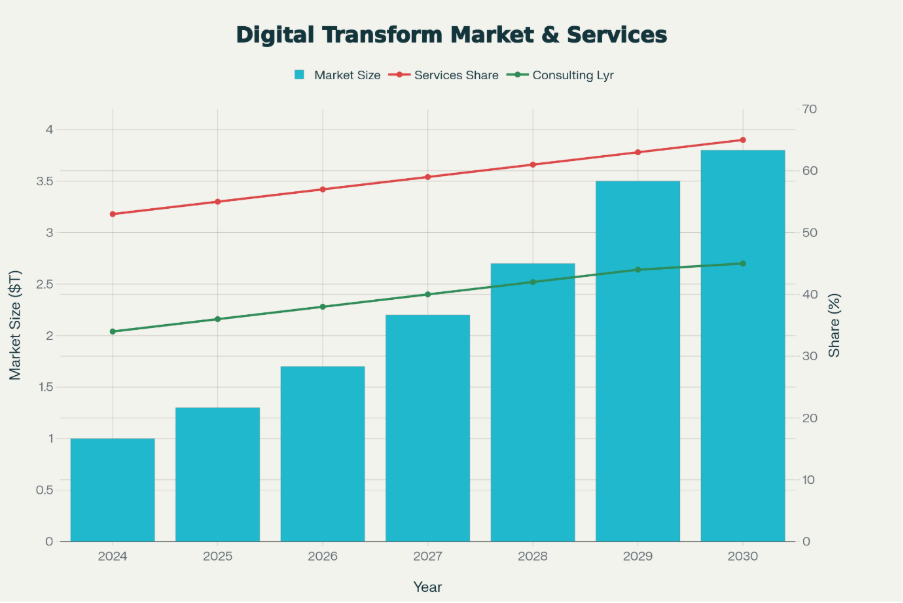
The digital services and transformation industry is expanding rapidly, with global spending projected to reach $3.9 trillion by 2027.
Enterprises are modernizing cloud environments, adopting AI, automating operations, and reimagining customer experience. Yet one truth consistently holds: transformation succeeds only when every stakeholder in the value chain is aligned, motivated, and engaged.
An industry growing fast but struggling with outcomes
Despite aggressive investments, 70% of digital transformation programs fail due to people-related challenges, change resistance, unclear ownership, weak collaboration, and low adoption.
As a result, organizations are shifting from technology implementation to business outcome-driven transformation, expecting measurable impact on cost, revenue, and customer experience.
At the same time, digital services firms face increasing competitive pressure. Global consulting giants, IT services leaders, hyperscalers, and niche providers are competing for the same transformation mandates. Capabilities are no longer the differentiator, execution quality, speed, and stakeholder engagement are.
A widening talent and capability gap
Cloud architects, AI/ML engineers, cybersecurity professionals, and data specialists remain in short supply. Rapid technology evolution creates constant skill obsolescence, while consulting roles face high burnout and attrition.
Talent engagement, through recognition, upskilling, and transparent growth, has become essential to sustain delivery excellence.
Partner ecosystems defining transformation success
Modern transformation is ecosystem-led. Hyperscalers drive co-innovation, ISVs accelerate implementation, and niche vendors support specialized needs. Strong partner collaboration, incentives, and motivation now directly influence win rates, delivery quality, and client satisfaction.
Why multi-persona engagement is now a strategic priority
Digital transformation firms must coordinate a wide network of personas: CIOs and business leaders, consultants, delivery teams, cloud partners, resellers, sales teams, customer success managers, and internal support functions. Each has unique expectations—and disengagement at any point slows transformation, reduces impact, and weakens client trust.
Unified engagement systems help firms:
- Shorten deal cycles
- Improve delivery predictability
- Reduce attrition
- Strengthen partner performance
- Increase client adoption and advocacy
- Drive measurable business outcomes
In an industry where technology is abundant, but outcomes aren’t guaranteed, the firms that invest in multi-persona engagement will lead the next wave of digital transformation success.
Major digital services & transformation firms across key regions
Digital transformation today is shaped by a diverse mix of global consulting leaders, IT services giants, hyperscalers, and niche digital specialists.
While each region operates with its own strengths, such as cloud modernization in the Americas, engineering depth in India, or industry-specific transformation in Europe, the fundamentals remain consistent.
These firms influence how enterprises adopt cloud, AI, automation, cybersecurity, and modern digital operating models.
The list below highlights illustrative digital transformation firms across key regions that collectively define how modern digital services are delivered globally.
Here is a visual representation of the market size growth for digital transformation (in trillions USD) from 2024 to 2030 along with the services share and consulting layer as percentages of the total market.
Modern digital transformation models & behavior shifts
Digital services firms today operate very differently from the traditional system-integration and project-delivery models of the past. Rapid cloud adoption, AI-native development, cybersecurity threats, and industry-specific digital needs have reshaped how firms design, execute, and scale transformation.
Below is a clear, modern view of the operating models driving today’s digital transformation ecosystem—followed by the behavioral shifts redefining expectations across clients, partners, and delivery teams.
How digital services firms operate today
Behavioral shifts transforming digital services
Digital transformation behaviors have evolved as client expectations, technology maturity, and operating pressures change. Firms now respond to new patterns in how decisions are made, how work is delivered, and how value is measured.
- Business-outcome over technology-first delivery: Clients expect programs anchored in measurable business value rather than large-scale tech rollouts.
- AI-native transformation becoming standard: GenAI, automation, and AI-assisted engineering accelerate delivery and reshape enterprise operating models.
- Demand for industry-specific blueprints: Enterprises favor pre-built transformation accelerators tailored to sectors like BFSI, retail, healthcare, and manufacturing.
- Change management and adoption as critical success factors: Transformation success increasingly depends on user readiness, communication, and long-term adoption—not just go-live.
- Rise of low-code/no-code participation: Business teams now build and iterate workflows without heavy engineering support, influencing delivery velocity and solution design.
- Sustainability and ESG requirements integrated by default: Transformation programs incorporate carbon reporting, compliance automation, and responsible technology principles.
- Deepening hyperscaler partnerships: Cloud alliances now influence deal cycles, modernization patterns, certifications, and co-sell motions.
- Shift toward flexible pricing and engagement models: Consumption-based and outcome-based pricing offer transparency and better alignment with client risk appetite.
- Customer experience-led transformation: Modernization is increasingly driven by CX priorities—omnichannel design, personalization, and service automation.
- Cybersecurity embedded from day one: “Security by design” ensures identity, governance, threat detection, and compliance controls are built into every initiative.
The engagement challenge in digital services across personas
As operating models evolve and transformation behaviors shift, the real complexity lies not in technology—but in orchestrating the people who power it. Every persona involved in digital transformation faces distinct engagement gaps that influence deal cycles, delivery quality, partner performance, and long-term client outcomes.
Below is a clear, persona-wise view of the engagement challenges shaping digital services today.
Customers
Enterprise buyers face long, complex decision cycles that are often slowed by internal alignment challenges.
- 9–18 month deal timelines cause fatigue and stalled momentum
- Difficulty securing buy-in from IT, business, finance, and C-suite leaders
- Hesitation to commit to POCs or pilots without early proof of value
- Low participation in case studies, testimonials, and reference calls
- Weak referral networks and limited peer advocacy
- Declining engagement with webinars, roundtables, and thought leadership
- Post-implementation renewal and expansion challenges
- Slow user adoption of delivered digital tools and platforms
Transformation consultants & advisory teams
Consulting talent drives strategy and roadmaps, yet faces burnout and low visibility.
- High attrition to product companies and competitors
- Travel-heavy workloads leading to burnout
- Contribution often invisible to leadership and clients
- Limited pathways to partner or practice leadership
- Knowledge hoarding instead of collaborative best-practice sharing
Delivery partners & specialized vendors
Delivery ecosystems are wide, but engagement is often transactional.
- Payment delays and manual procurement frictions
- Innovation or new capability contributions go unrecognized
- Not enough strategic depth in partner relationships
- Limited incentives for co-selling or joint solutions
Connectors (strategic alliances & referral networks)
Alliances and referral ecosystems influence pipeline quality but lack structure.
- Inconsistent referral quality and mismatched ICPs
- Lack of joint GTM incentives or shared marketing motions
- Weak feedback loops on deal status and client satisfaction
- Low participation in training or certification programs
Channel partners (resellers & implementation partners)
Channel networks need predictable motivation and clarity.
- Complex commission structures causing disputes
- Limited pipeline visibility and inconsistent updates
- Minimal co-marketing support and enablement
- Highly variable partner performance and ongoing engagement
- No recognition for non-revenue contributions like implementation quality
Sales & business development teams
Sales cycles in digital services are long and require sustained motivation.
- 12–18 month enterprise cycles reduce momentum
- Difficult stakeholder navigation slows pipeline progress
- Inconsistent lead flow and qualification
- Misalignment between sales and presales collaboration
Employees (delivery & technical teams)
Engineering and delivery teams drive execution but face rising pressure.
- Burnout from tight deadlines, scope changes, and expectation overload
- Innovation contributions and frameworks often overlooked
- Constant anxiety due to fast-changing tech skills
- Remote work isolation reducing team cohesion
- Limited visibility into career pathways
Employees (support functions)
Support teams enable transformation but remain under-recognized.
- Perceived as back-office rather than strategic enablers
- Weak connection to client outcomes
- Culture gaps between enabling and delivery teams
Customer success & transformation enablement teams
Adoption and expansion depend heavily on CS teams, yet recognition is limited.
- Difficulty driving post-go-live adoption across functions
- High pressure from NPS, CSAT, and renewal KPIs
- Training, enablement, and change management efforts often overlooked
- Friction during handoffs between delivery and CS teams
The engagement blueprint for digital services firms: The 5-journey framework
As digital services firms navigate complex buyer groups, global delivery models, and expanding partner ecosystems, engagement cannot be random or siloed. It needs a structured system that motivates every persona—from clients to consultants to partners—across the entire transformation lifecycle. This is where the 5-journey engagement framework becomes essential.
Below is a clear breakdown of how digital services firms can design unified, reward-led engagement across acquisition, activation, engagement, performance, and retention journeys.
As transformation programs grow more complex, each persona, buyers, consultants, partners, sales teams, engineers, support staff, and customer success, needs role-specific motivation to stay aligned, engaged, and performance-driven.
Explore how Xoxoday powers global rewards, incentives, and loyalty programs for leading brands. Get a Personalized Demo
How digital services firms can motivate every persona across their value chain
Below is a persona-wise overview of how digital services firms can design targeted engagement and reward programs across their ecosystem.
Customers
Client-facing incentives help accelerate decisions, strengthen advocacy, and drive adoption across multi-stakeholder accounts.
- Rewards to accelerate participation in POCs, pilots, and assessments
- Incentives for evaluation milestones to shorten long deal cycles
- Recognition programs for case studies, testimonials, and reference calls
- Campaign engagement rewards for workshops, roundtables, and ABM initiatives
- Referral incentives for clients introducing qualified opportunities
- Co-innovation rewards for advisory boards, beta testing, and early access programs
- Event participation rewards for summits and CXO sessions
- Adoption and expansion rewards tied to usage milestones and KPI achievement
Book a demo to see how leading firms engage CXO buyers.
Transformation consultants and advisory teams
Consultants contribute directly to strategy and client outcomes; recognition reinforces expertise, loyalty, and innovation.
- Tiered loyalty structures linked to tenure, delivery excellence, and thought leadership
- Milestone rewards for project completion, client satisfaction, and roadmap execution
- Incentives for developing frameworks, tools, accelerators, and methodologies
- Access to experiential and lifestyle-based reward choices
- Peer recognition for collaboration, mentoring, and knowledge sharing
- Long-term retention rewards linked to multi-year contribution
- Wellness and balance-oriented rewards for high-pressure consulting roles
Explore consultant-first engagement solutions.
Delivery partners and specialized vendors
Partners influence delivery velocity, capability depth, and implementation quality; structured rewards help elevate performance.
- Performance-based tiers tied to SLA adherence and delivery quality
- Long-term partnership rewards for consistent, multi-year engagement
- Incentives for introducing new solutions, accelerators, or technical expertise
- Transparent tracking for incentives, earnings, and milestone achievements
- Appreciation programs through exclusive events, training, and showcases
- Quality delivery bonuses for zero-defect execution and high CSAT
Discover how to elevate your partner ecosystem.
Connectors (strategic alliances and referral networks)
Alliances contribute to pipeline quality and market access; motivating them ensures stronger, more predictable collaboration.
- Loyalty tiers based on lead quality, conversion, and deal value
- Incentives for co-marketing, co-branded events, and joint GTM initiatives
- Tiered recognition for deeper collaboration and relationship maturity
- Rewards for completing training and certification programs
- Incentives for sharing market insights, competitive intelligence, and deal support
- Bonuses for co-selling and opportunity influence
Learn how to activate high-value connector networks.
Channel partners (resellers and implementation partners)
Channel partners expand reach and delivery capacity; structured engagement keeps them active and aligned.
- Multi-tier loyalty programs with clear progression and benefits
- Incentives tied to revenue, deal velocity, and portfolio strength
- Rewards for early deal registration and proactive pipeline contribution
- Recognition for implementation excellence and customer satisfaction
- Access to performance-based co-marketing funds
- Incentives for completing technical and sales certifications
- Engagement rewards using badges, leaderboards, and campaigns
- Retention bonuses tied to long-term partnership continuity
See proven partner engagement models.
Sales and business development teams
Sales teams operate long cycles and complex decision paths; transparent, real-time motivation sustains momentum.
- Real-time commission visibility with automated crediting
- Gamified contests to energize pipeline creation and closures
- Milestone rewards for opportunity progression and qualification
- Dynamic leaderboards for individual and team-based performance
- Incentives for close alignment with presales and solution teams
- Instant recognition for deal closures and key account wins
- Quarterly and annual accelerators for exceeding targets
Experience modern sales motivation systems in action.
Employees (delivery and technical)
Engineering and delivery talent drive transformation outcomes; recognition must reward innovation, quality, and expertise.
- Peer-to-peer appreciation for collaboration and technical problem-solving
- Innovation rewards for new tools, frameworks, and accelerators
- Certification incentives for cloud, AI/ML, DevOps, cybersecurity, and data skills
- Recognition for sprint completions, releases, and on-time delivery
- Career progression and promotion-based rewards
- Work anniversary and long-term contribution recognition
- Spot awards for critical escalations, performance, and quality
Build a culture that motivates high-performing engineering teams.
Employees (support functions)
Support teams keep transformation programs operational; recognition ensures cohesion and organizational alignment.
- Cross-functional appreciation from delivery, consulting, and sales teams
- Values-based rewards reinforcing collaboration, integrity, and client-centricity
- Tenure and milestone celebrations for long-term contribution
- Rewards tied to participation in surveys, town halls, and improvement initiatives
- Collaboration rewards for joint wins across HR, finance, operations, and marketing
- Peer recognition programs for invisible but essential work
- Spot awards for urgent, high-impact support
Unlock a more connected, empowered workplace.
Customer success and transformation enablement teams
Post-go-live success hinges on adoption, satisfaction, and renewal; recognition must reinforce customer outcomes.
- Incentives for achieving client KPIs, adoption milestones, and transformation outcomes
- Rewards for driving usage, activation, and platform enablement
- Recognition tied to CSAT, NPS, and qualitative customer feedback
- Incentives for successful onboarding, training, and change management programs
- Celebration of renewals, expansions, and multi-year relationship wins
- Spot awards for escalation handling and critical issue resolution
- Peer recognition for cross-functional collaboration with delivery and sales
See how engagement can power sustained transformation success.
Digital services firms manage multiple personas, workflows, and transformation journeys simultaneously. A unified rewards architecture creates consistency, removes operational friction, and ensures every engagement milestone—across clients, partners, consultants, sales, and employees—is powered by clear, automated, and compliant systems.
Program architecture for digital services: How to build a unified rewards system
Below is a streamlined view of how digital services organizations can architect a connected, scalable rewards and engagement ecosystem.
Integration with CRM, project management, and collaboration tools
Integrating with platforms like Salesforce, HubSpot, Jira, Azure DevOps, Slack, and Teams ensures reward triggers flow directly from real activities—not manual updates.
- Automatic reward triggers for deals, delivery milestones, certifications, and usage events
- Sync of account, opportunity, and project progress to reduce reconciliation errors
- Seamless experience for distributed teams
Rule-based accrual for multi-persona engagement programs
A centralized engine ensures consistent earning logic across clients, partners, consultants, sales, and internal teams.
- Standardized rules for activities like POCs, certifications, sprint completions, and KPIs
- Persona-specific reward logic that reflects different roles and metrics
- Reduced disputes through transparent, system-driven calculations
Real-time dashboards for leadership and stakeholders
Dashboards give each persona visibility into performance, progress, and rewards.
- Sales dashboards for targets, commissions, and leaderboards
- Delivery dashboards for sprint milestones and quality metrics
- Partner dashboards for pipelines, tier progression, and redemption
- Executive dashboards for overall program performance
Data-driven segmentation for personalizing incentives
Segmentation helps tailor programs based on role, performance, geography, tenure, and transformation maturity.
- Persona-specific campaigns for clients, partners, consultants, and employees
- Targeted nudges for low-engaged or high-growth segments
- Dynamic tiers to reward progressio
Multi-channel communication for timely engagement
Communication should meet people where they already work.
- Email, SMS, WhatsApp, Slack, and Teams-based notifications
- Instant updates for rewards, progress, leaderboard changes, and approvals
- Campaign-specific messaging across ABM, certification, or partner programs
Global reward marketplace with localized catalogs
A diverse, region-ready reward catalog ensures relevance across global delivery teams and clients.
- Local currencies, region-specific brands, and digital-first fulfillment
- Customizable catalog categories for travel, learning, lifestyle, and experiences
- Redemption options suitable for employees, partners, and clients
Governance, compliance, and audit readiness
A unified system ensures rewards stay compliant across geographies and enterprise policies.
- Tax-compliant reward issuance and reporting
- Audit trails for every transaction and milestone
- Role-based access controls for finance, HR, sales, and operations
- Budget controls across teams, programs, and geographies
API-first architecture for flexible enterprise integration
APIs enable rapid deployment across diverse tech stacks.
- Easy integration with HRMS, CRM, LMS, and project systems
- Configurable reward triggers for all transformation journeys
- Scalability across regions, business units, and partner ecosystems
Gamification elements for boosting participation
Gamified components keep transformation stakeholders energized.
- Leaderboards for sales, delivery, partners, and consulting teams
- Badges and streaks for learning, certifications, and consistent engagement
- Contests aligned to quarterly focus areas or strategic initiatives
Checklist for digital services & transformation engagement and rewards programs
A successful engagement ecosystem in digital services requires clarity, consistency, and cross-persona alignment. The checklist below helps firms evaluate whether their programs are structured, scalable, and impact-driven across clients, partners, consultants, sales, and employees.
Strategic foundation
- Define engagement objectives for each persona (clients, consultants, partners, sales, employees)
- Align rewards to business outcomes (revenue, retention, innovation, delivery quality)
- Set governance with clear roles, approval structures, and compliance expectations
- Allocate budgets across personas and journeys
Client engagement (ABM-driven)
- Identify ABM target accounts and stakeholder personas
- Set up deal acceleration rewards for POCs, pilots, and evaluation milestones
- Build a structured advocacy program with tiered incentives
- Establish reward-driven event and campaign engagement
- Implement adoption and expansion incentives tied to usage or KPI metrics
Partner ecosystem management
- Define partner tiers (Silver, Gold, Platinum) with transparent criteria
- Establish clear commission and incentive structures
- Launch co-innovation and joint GTM reward programs
- Set certification and enablement completion incentives
- Provide a partner portal with performance visibility and gamification
Sales enablement
- Implement real-time commission tracking and automated payouts
- Design gamified contests aligned to quarterly goals
- Set pipeline milestone rewards for opportunity progression
- Build leaderboards across individuals, teams, and regions
- Create incentives for presales–sales collaboration
Employee experience
- Deploy peer recognition for cross-functional appreciation
- Incentivize in-demand certifications and skill development
- Celebrate delivery milestones (sprints, releases, quality scores)
- Establish tenure-based loyalty rewards
- Launch spot awards for high-impact contributions
- Encourage survey and feedback participation with incentives
Technology and integration
- Integrate CRM, HRMS, LMS, and project tools for automated triggers
- Enable dashboards for sales, delivery, partners, HR, and leadership
- Configure multi-channel communication (email, SMS, WhatsApp, Slack, Teams)
- Build API-driven connections for seamless data flow
- Offer a global reward marketplace with localized catalogs
Program operations
- Configure rule-based earning logic for every persona
- Set segmentation rules (role, geography, performance, tenure)
- Establish approval workflows for redemptions
- Implement compliance controls for taxation and audit trails
- Use gamification (badges, contests, leaderboards) to drive participation
Communication and launch
- Build persona-specific communication plans
- Create awareness campaigns across all delivery and partner organizations
- Prepare training materials for managers and administrators
- Set up feedback channels for program improvement
- Establish quarterly review and optimization cycles
Measurement and optimization
- Define KPIs for each persona (e.g., attrition, NPS, deal velocity, adoption)
- Enable real-time analytics and reporting dashboards
- Track ROI across programs and journeys
- Conduct A/B testing for reward types and messaging
- Continuously refine based on data insights
Compliance and governance
- Ensure tax-compliant reward distribution across countries
- Implement privacy and security controls
- Maintain audit logs for every action
- Define budget controls and approval hierarchy
- Schedule regular compliance reviews
Explore how Xoxoday powers global rewards, incentives, and loyalty programs for leading brands. Get a Personalized Demo
Conclusion: The future of engagement in digital services & transformation
The next era of digital services will be shaped by firms that invest in people engagement as deliberately as they invest in technology. As AI, cloud, and automation accelerate transformation, sustained success will depend on how well organizations motivate clients, partners, consultants, sales teams, and delivery talent across every stage of the journey. Unified, real-time, and outcome-driven engagement systems will become the new competitive advantage—driving faster deal cycles, stronger partnerships, higher adoption, and long-term talent retention.
Book a demo to explore transformation-ready engagement programs.


